Landscaping in Austin built for live oaks, limestone and a hundred-degree July.
Mowing and lawn programs, tree trimming and removal, stump grinding, landscape design, patios and walls, irrigation repair, sod, xeriscaping, lighting, beds and mulch. Crews that know which grass survives August, which trees the city protects, and what the watering schedule allows. Austin and the suburbs out to Round Rock, Cedar Park, Georgetown, Pflugerville, Leander, Dripping Springs, Kyle, Lakeway and Hutto.
Free walk-through and written estimate · No deposit until you approve a plan · Licensed irrigator for sprinkler work · Heritage tree permits filed before any cut
- BrownPatchy, thin and crunchy by AugustWrong grass for the sun, shallow watering, or a sprinkler zone that quietly stopped. Audit first, then sod or reseed.
- ShadedNothing grows under the oaksLive oak shade kills Bermuda. St. Augustine, groundcovers or a mulched bed with shade natives.
- HangingA limb over the roof or the drivewayTrimming by a climber or bucket, and a check on whether the tree is protected before anything bigger.
- SlopedSoil washing out, a hill nobody can mowTerraces, a dry-stack limestone wall under four feet, or a planted slope that holds itself.
- ThirstyA water bill that climbs every summerDrip in the beds, an audited sprinkler system, and a front yard that does not need a lawn at all.
Every job starts with a walk-through and ends with an itemized price on paper.
Fifteen ways to deal with a Central Texas yard
Lawn care and mowing
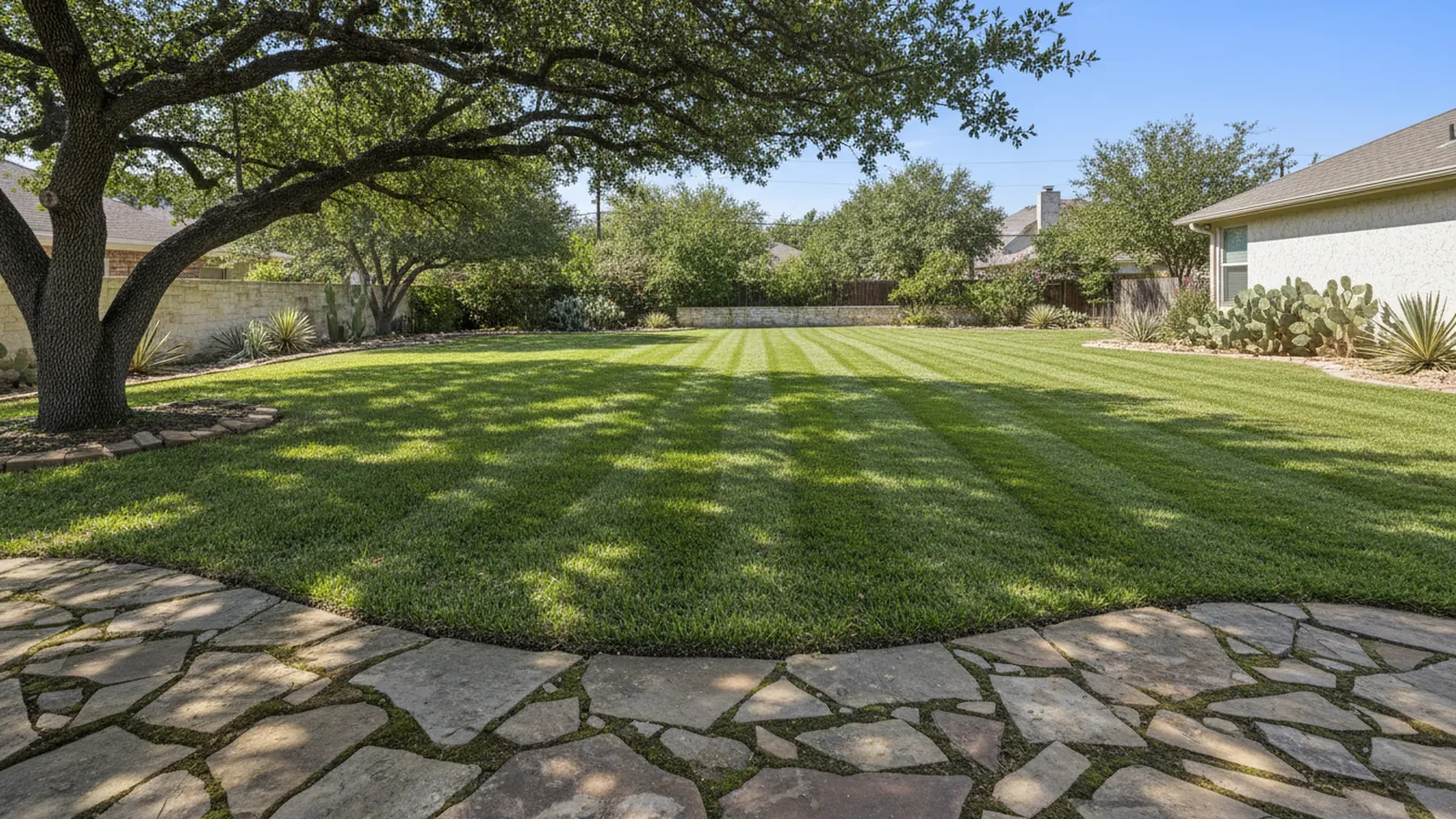
Weekly or biweekly mowing, edging and blowing, or a full program with feeding, aeration and weed control timed to the Austin calendar.
Lawn care →Tree trimming and removal
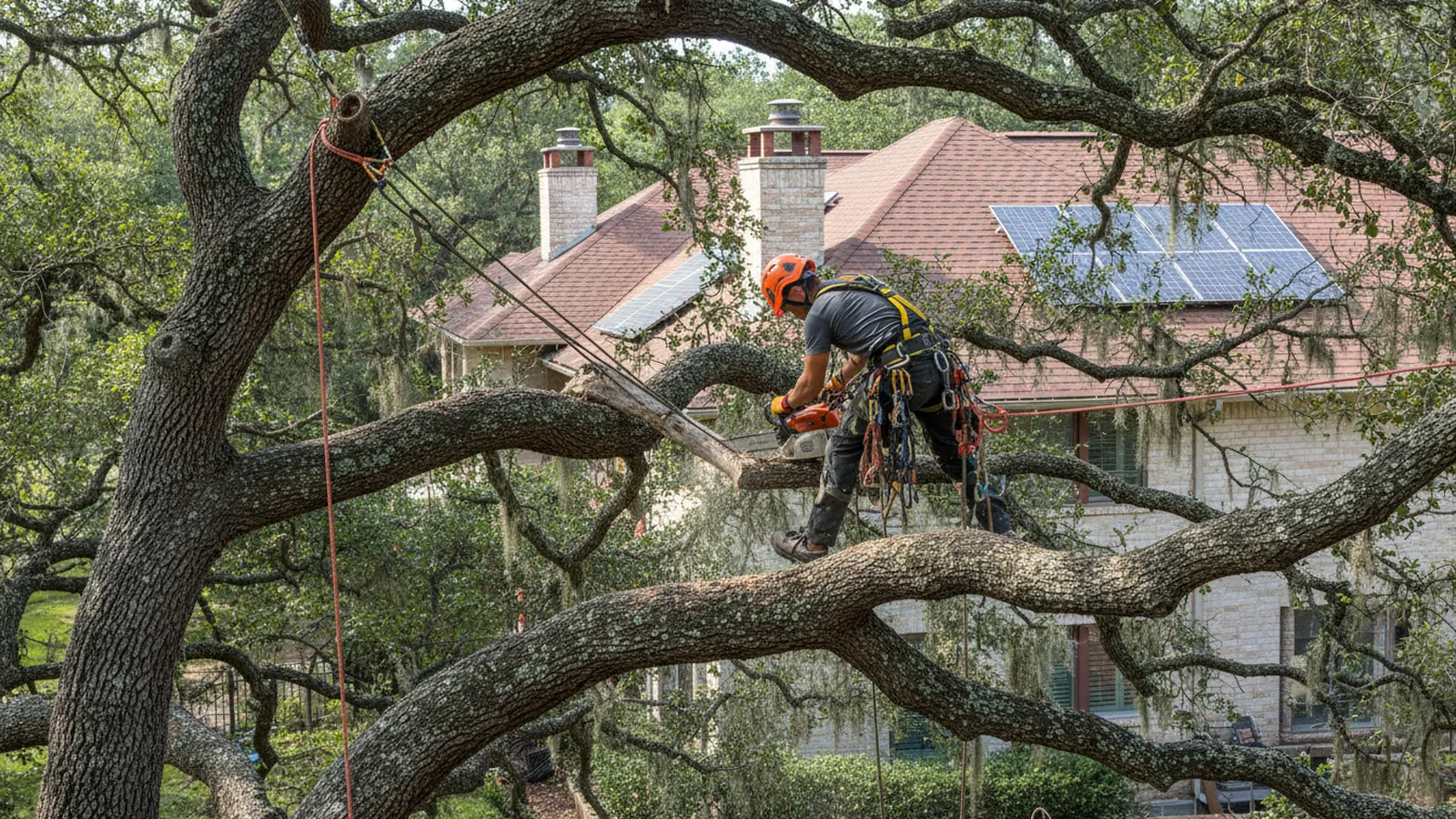
Climbers and bucket trucks for live oaks, pecans and cedar elms; removals with a crane when the tree is over the house; permits handled.
Tree work →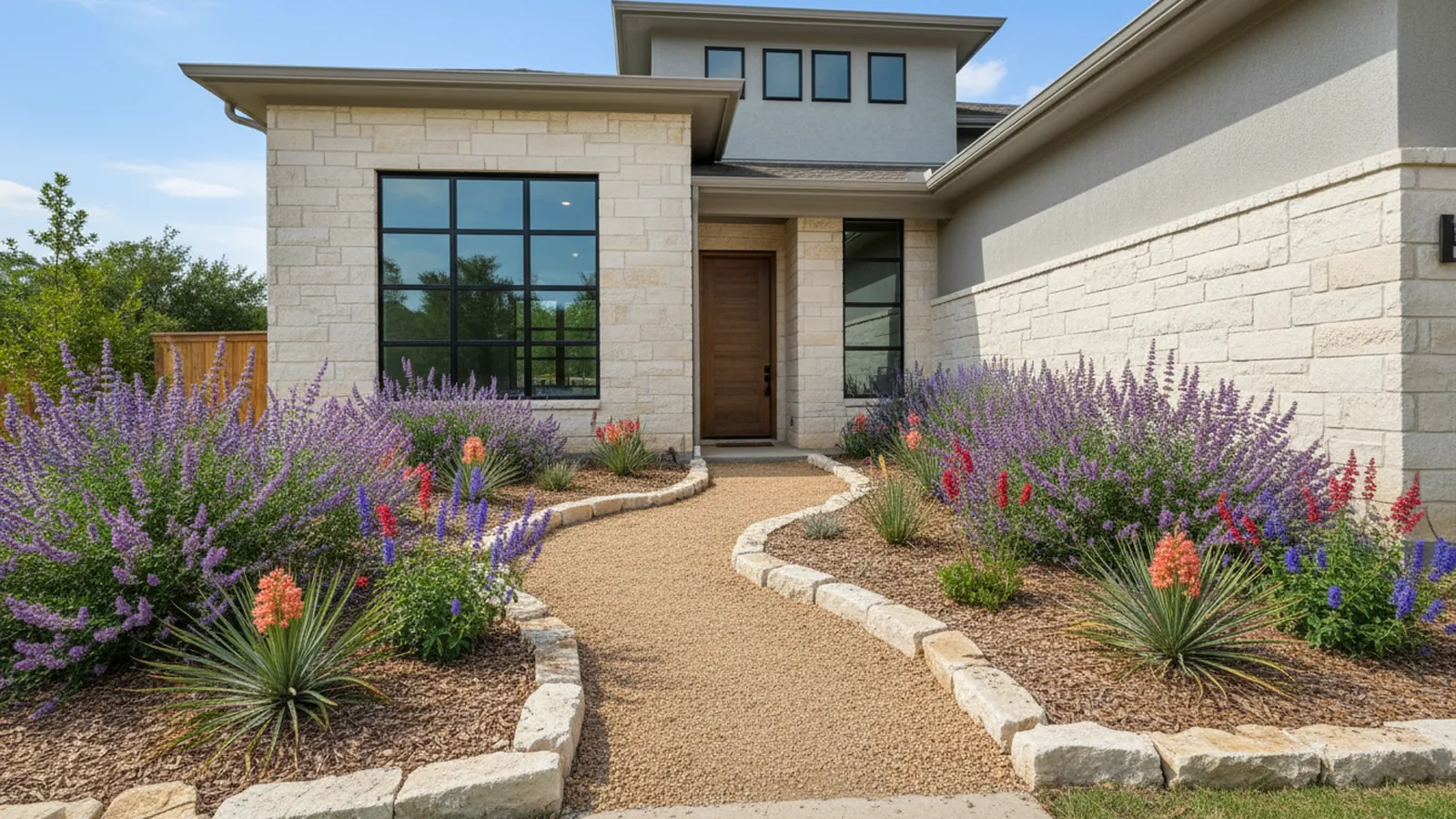
Landscape design
A plan for the whole yard, drawn for the sun and the water rules, then planted in the right season with the right soil.
Design →Hardscaping
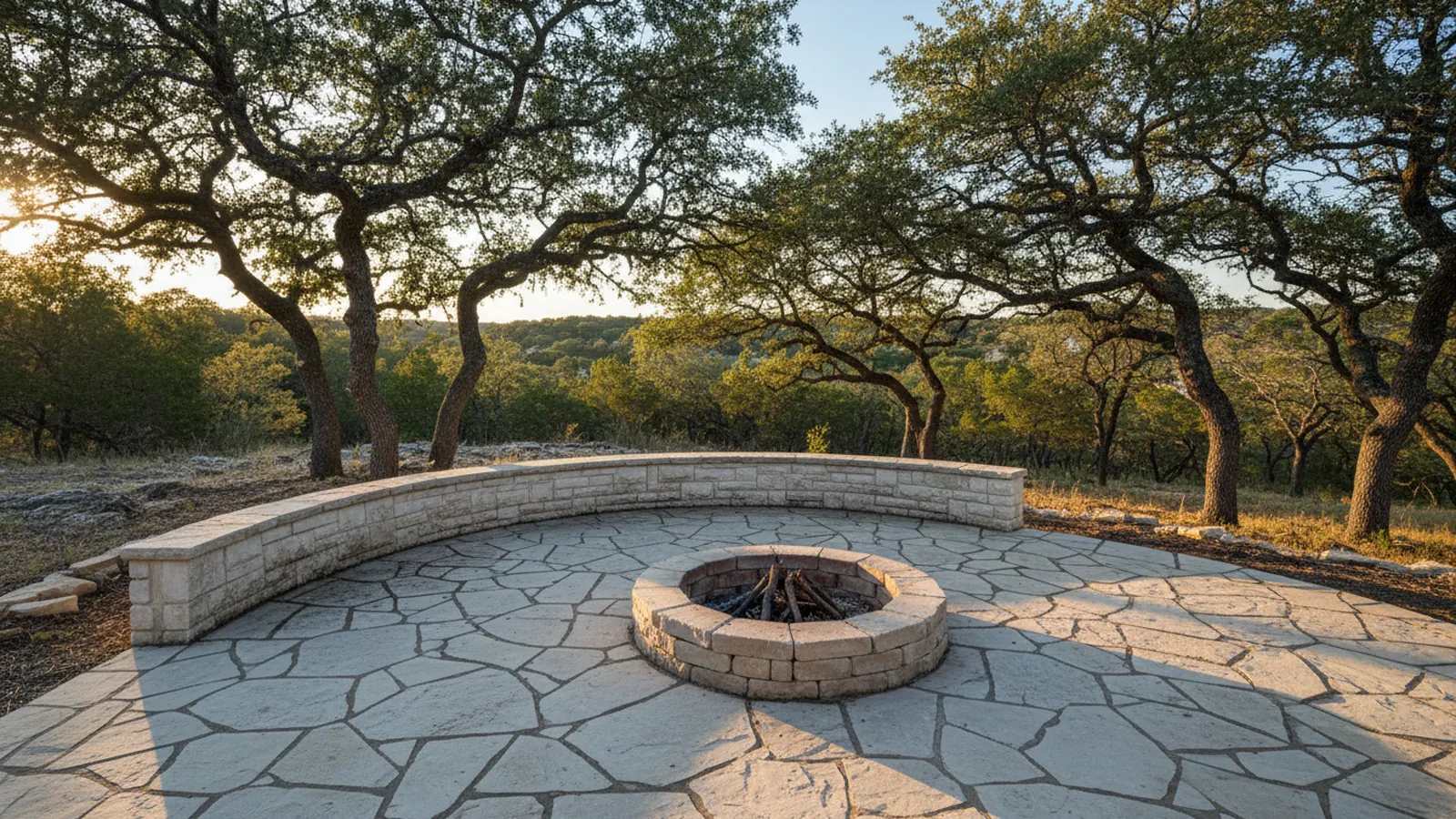
Limestone and flagstone patios, walkways, fire pits and retaining walls, built on the slopes the Hill Country gives you.
Hardscape →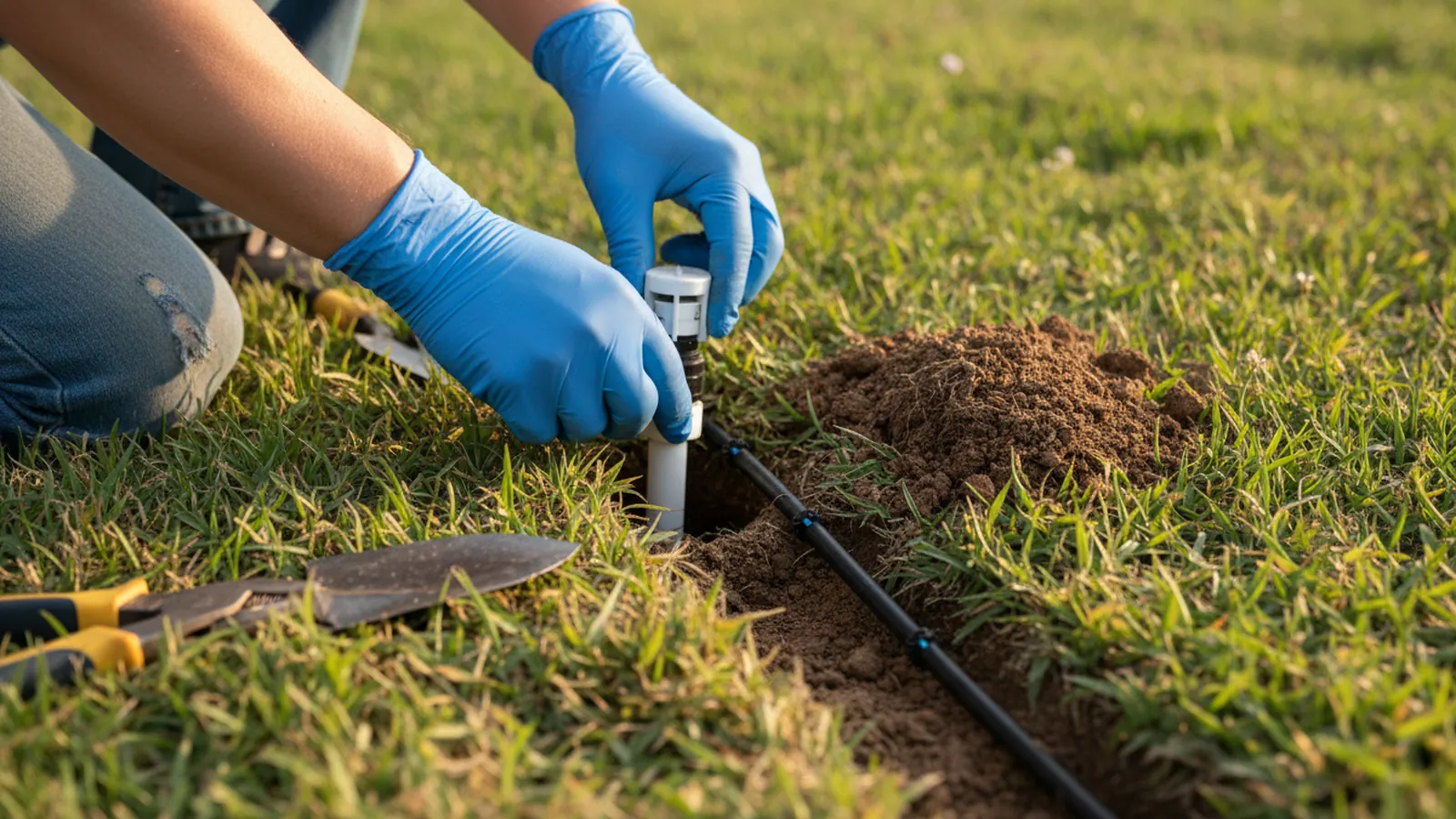
Irrigation repair
Broken heads, stuck valves, dead controllers and leaking lines found and fixed by a TCEQ Licensed Irrigator, then the system audited against the watering schedule.
Irrigation →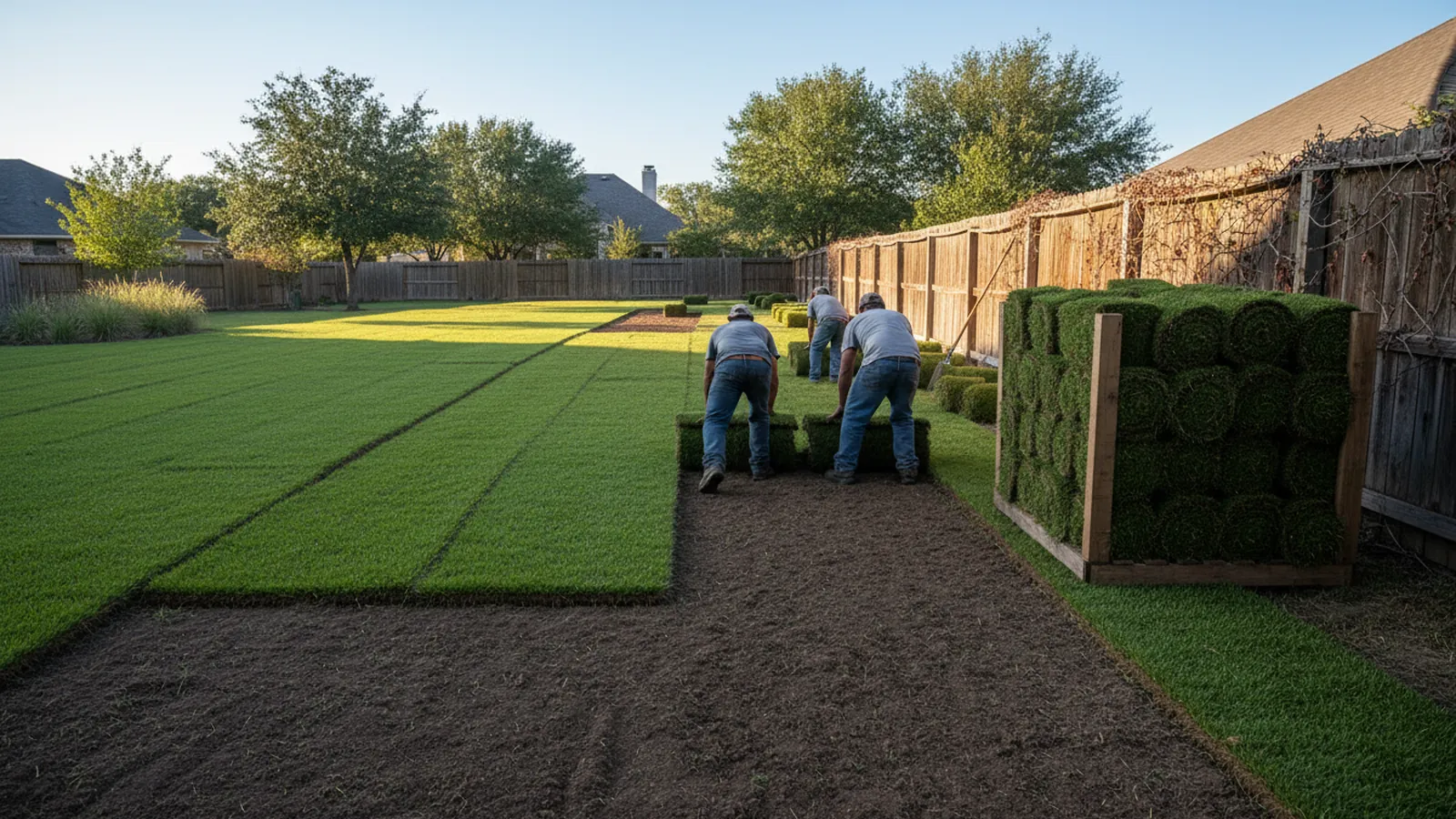
Sod installation
Old lawn out, soil prepped, Bermuda, Zoysia or St. Augustine laid and rolled, with the watering plan that gets it rooted.
Sod →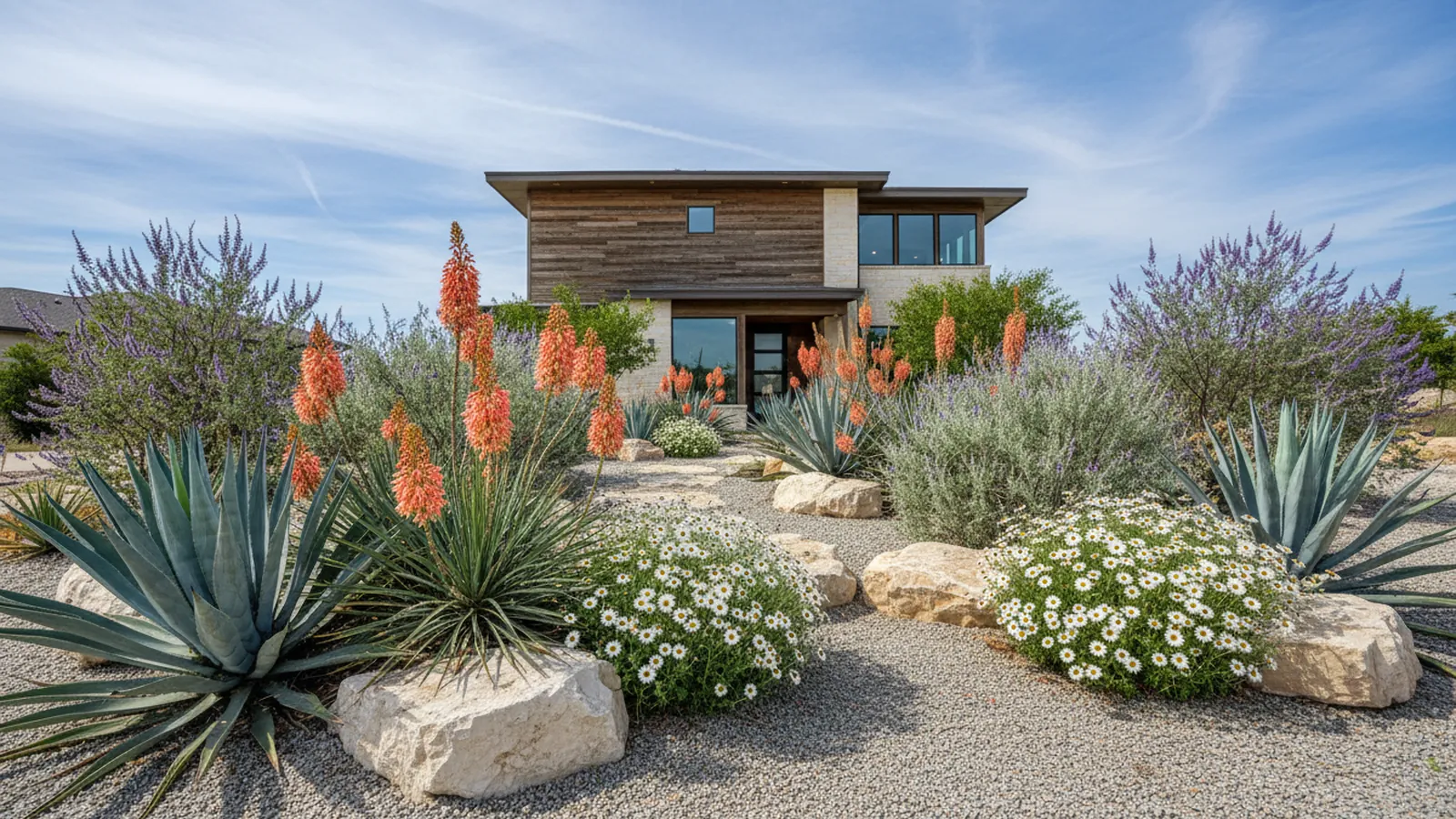
Xeriscaping
Front yards that look like Central Texas instead of fighting it: natives, gravel, drip, and a water bill that stops climbing.
Xeriscape →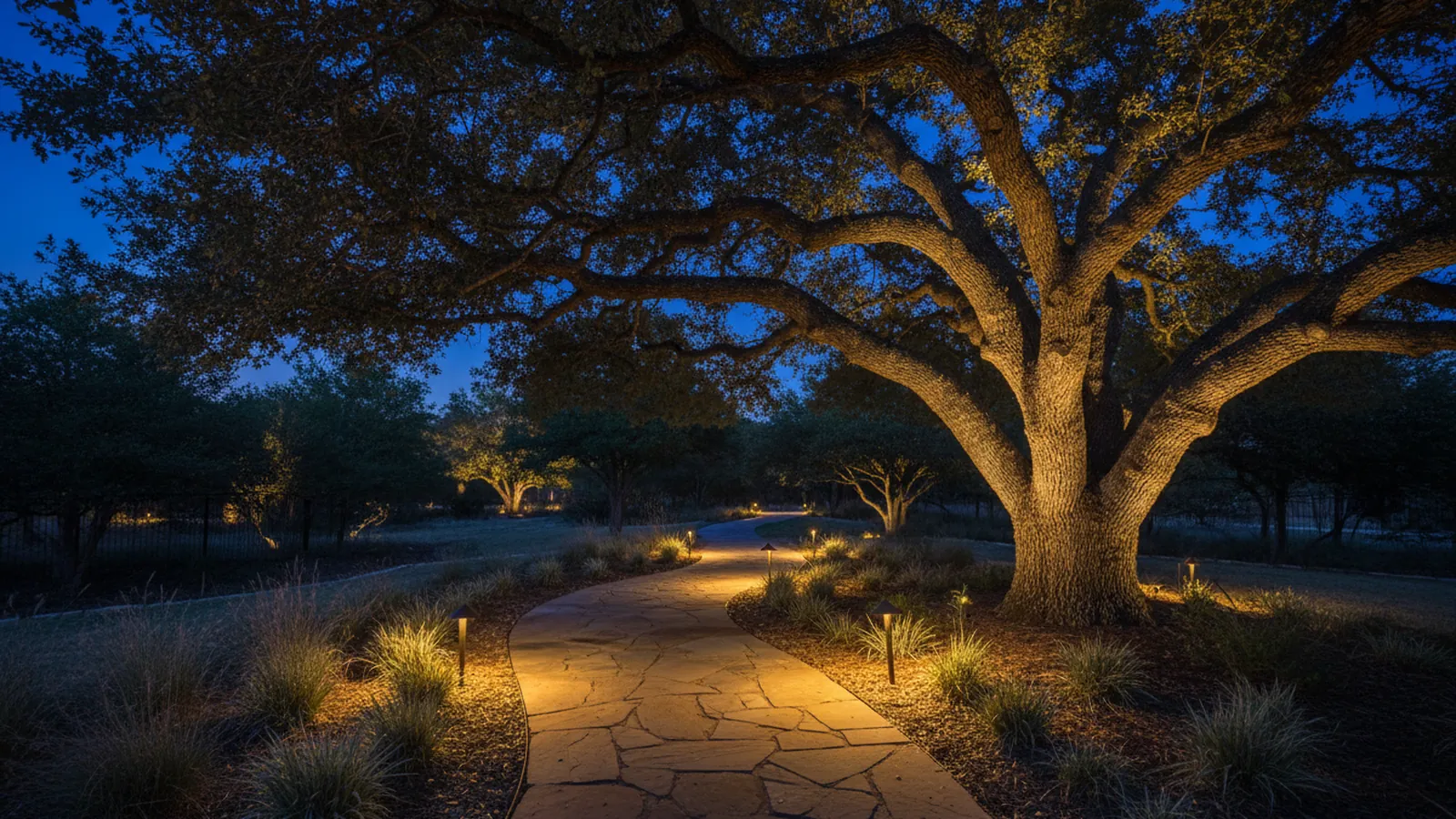
Landscape lighting
Low-voltage LED path lights, uplights on the oaks, and step and wall lights, laid out for the way the yard is used after dark.
Lighting →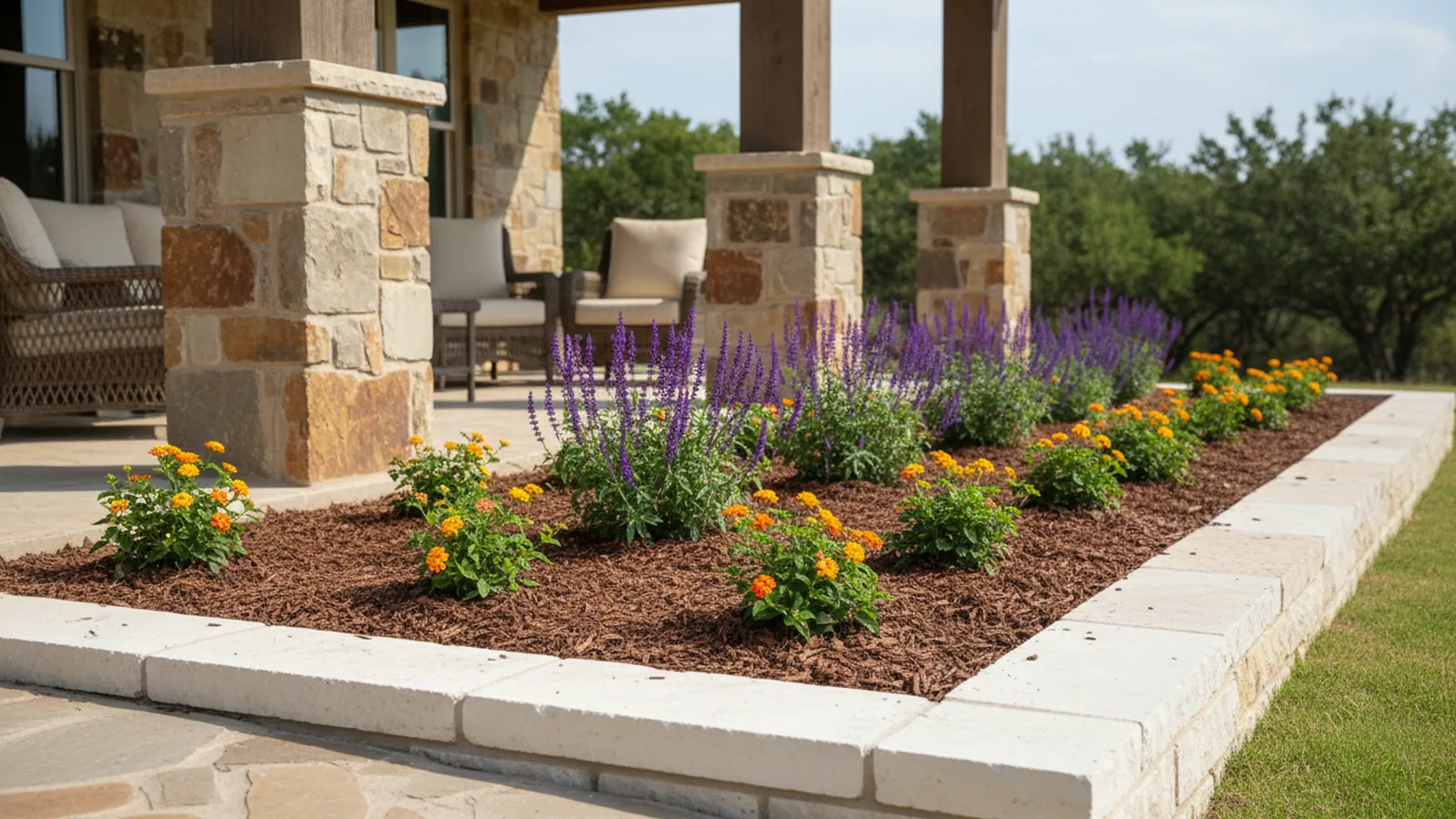
Mulch and beds
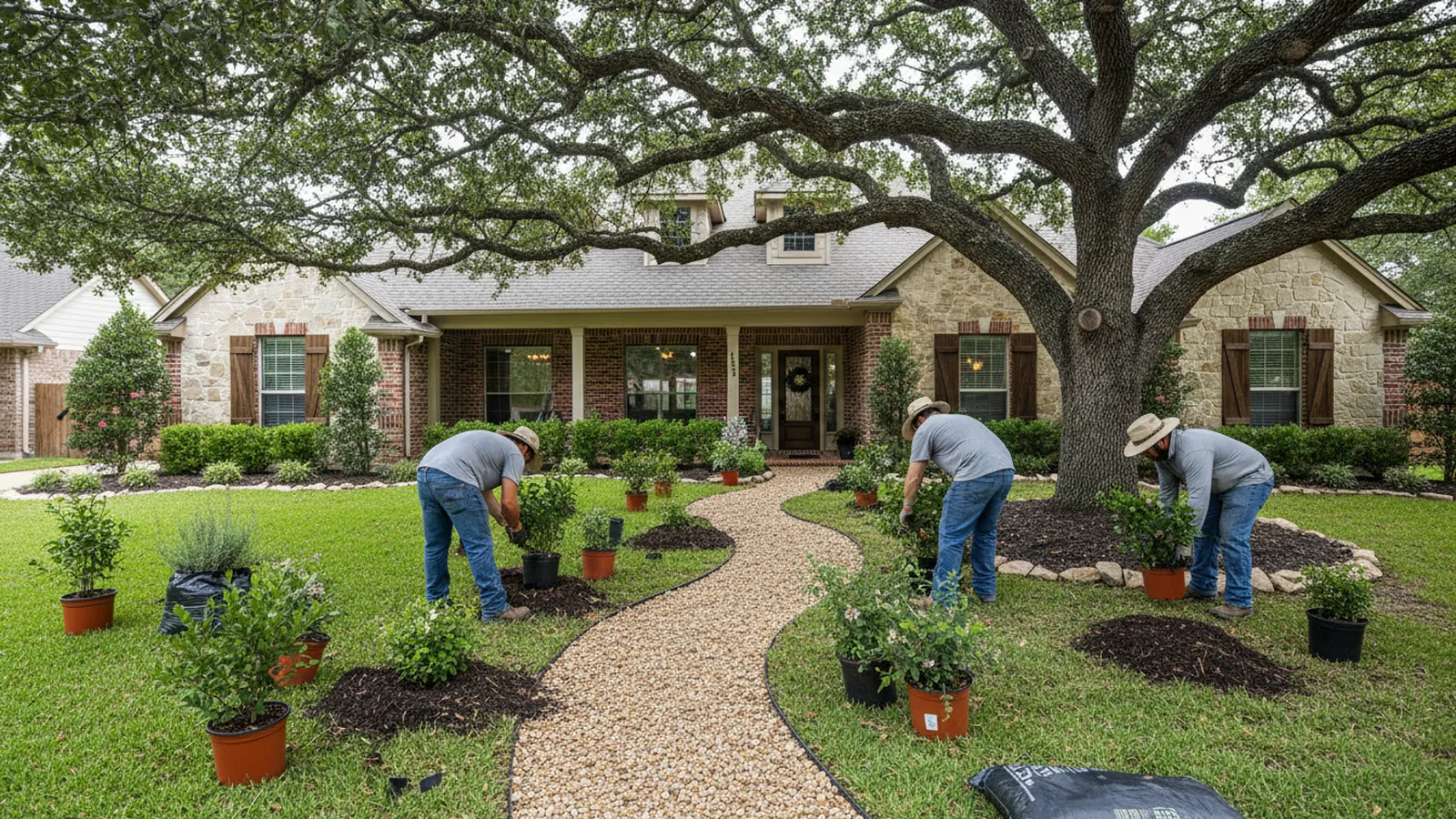
Beds cut and edged, mulch spread at the right depth, seasonal color swapped out in spring and fall.
Beds →A city of a million people, most of them renting, where the homeowners care a great deal about the yard
Austin crossed a million residents in 2025 by the Census Bureau's estimate. Fewer than half of its homes are owner-occupied, which means the people who do own are the ones calling about the lawn, and the property managers who look after the rest want it handled without a conversation. The suburbs are a different picture: owner-occupied, higher incomes, bigger lots.
Three sets of rules that shape every Austin yard
Protected at 19 inches, heritage at 24
The city's tree ordinance covers any tree on developed residential land once the trunk reaches 19 inches across at breast height. Trimming is fine; removal needs a permit, and a heritage tree at 24 inches needs a hardship finding and mitigation. The contractor measures, photographs and files before a chainsaw is started.
A schedule by address, year round
Austin Water assigns watering days and hours and tightens them in drought stages. An irrigation system has to be audited to run inside that allowance, and a new system needs an Austin Water permit and a TCEQ Licensed Irrigator. Beds on drip and lawns watered deep and seldom are how a yard stays green inside the rules.
Four feet and eight feet
A retaining wall over four feet tall needs a building permit and an engineer's plan; patios, walkways and low walls do not. A fence over eight feet needs a permit; the standard six-foot privacy fence does not. Hardscape is designed to stay on the right side of those lines unless the slope leaves no choice.
Four seasons of Central Texas, each with its own call
Spring: beds, pre-emergent, new plantings
Mulch the beds before the heat, put down pre-emergent before the soil hits 55°F, and plant perennials while the rains still come.
The calendar →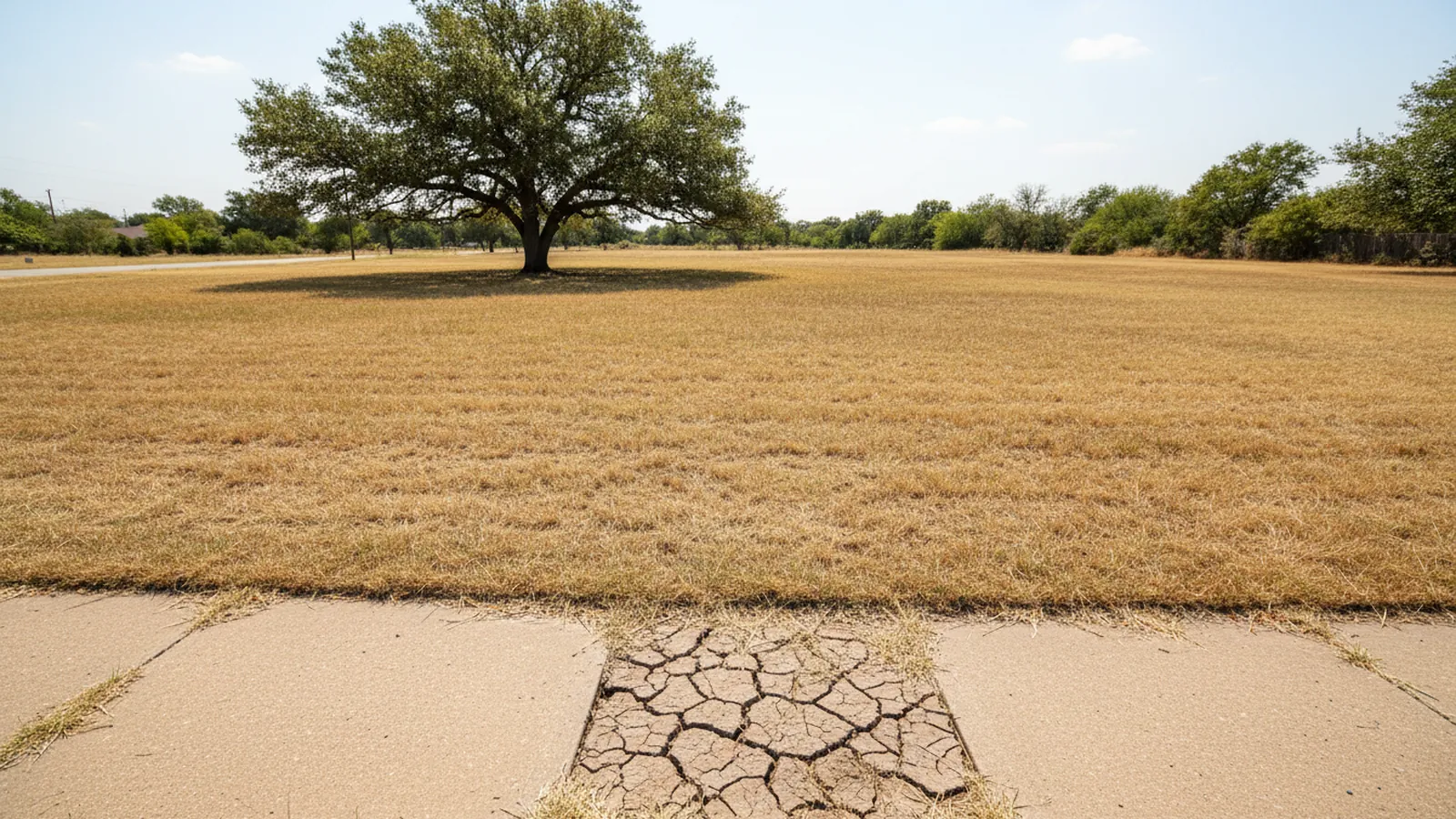
Summer: water, mow high, hold on
Mow Bermuda and Zoysia taller, water deep on the assigned day, and stop feeding when the grass goes dormant from heat.
Watering rules →Oak pruning window
Live and red oaks are pruned between July and January to keep oak wilt beetles off fresh cuts, and every cut is painted.
Trimming →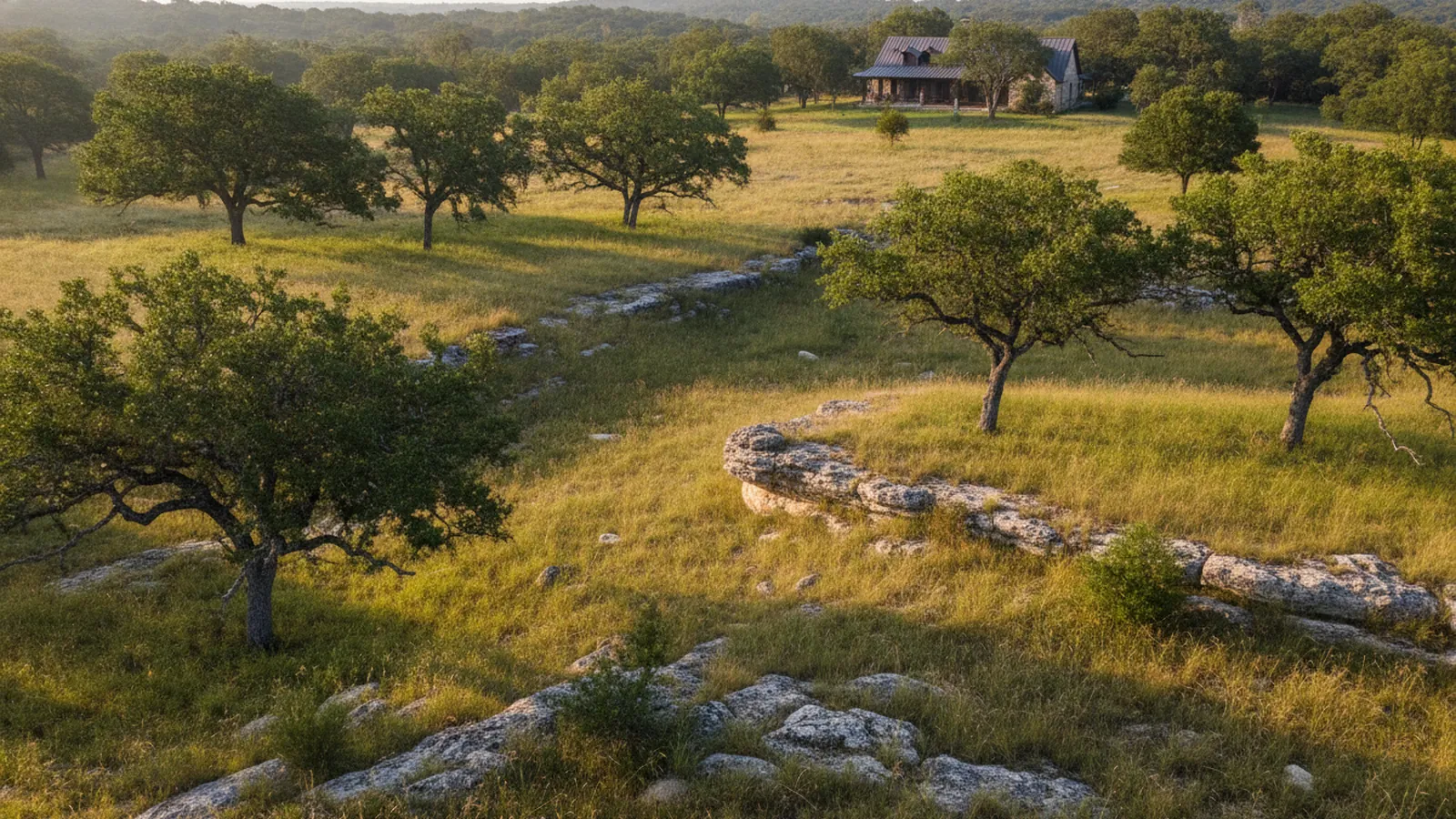
Fall and winter: sod, trees, stone
The best time to lay sod, plant trees and build patios: cool crews, soft ground, and a whole winter for roots to settle before July.
Sod →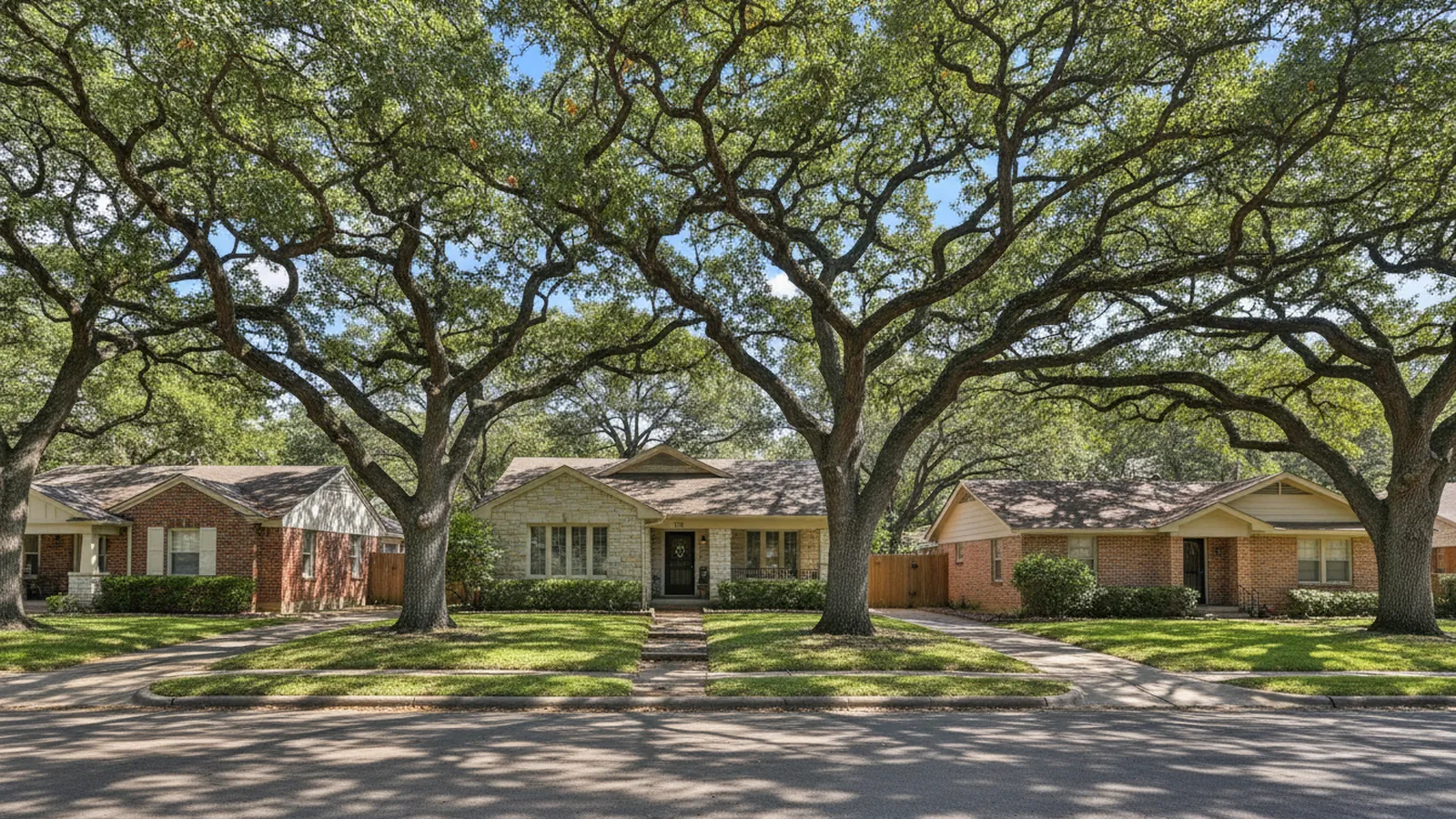
Blackland clay in Pflugerville, limestone and caliche west of MoPac, and a different yard on each
East of Interstate 35 the ground is Blackland Prairie clay: deep, dark, holds water, cracks in August and heaves in a wet winter. It grows a lawn well and drowns a retaining wall footing that has no drainage. West of MoPac, in Westlake, Lakeway, Cedar Park and out to Dripping Springs, there are a few inches of soil over limestone and caliche; it drains instantly, holds no water, and the live oaks and cedar elms that grow on it are the yard's main asset. Sod there needs imported soil; plantings need natives that root into rock.
The suburbs add their own layers. Round Rock, Georgetown and Hutto are mostly newer subdivisions on builder lawns with builder sprinkler systems, now a decade old and leaking. Cedar Park and Leander have larger lots and HOAs with opinions about front yards. Dripping Springs and Kyle run from suburban streets to acreage with deer, which changes the plant list entirely.
Every town we cover →From the first call to a finished yard
Tell us the problem
A lawn that dies every August, a limb over the roof, a slope that washes out, a front yard you are tired of watering. Call any hour or send the form.
A walk-through
Someone comes out, usually within a few days, and looks at the soil, the shade, the slope, the sprinklers and the trees. Nothing is quoted from a satellite photo.
A price on paper
Itemized: materials, plants by name and size, labor, haul-off, any permit. For design work, a plan you can read. No deposit until you approve it.
The work, in season
Scheduled for the right month where the plants care, and for the next open day where they do not. The crew walks the finished yard with you before leaving.
Austin and the ring of towns around it
All of Austin: the bungalow streets of Hyde Park and Travis Heights, the ranch homes of Allandale and Northwest Hills, the big lots of Westlake and Barton Creek, and the newer streets of Circle C, Mueller and the Domain's edges. South Austin from Oltorf down past Slaughter Lane is home base.
North and east: Round Rock, Pflugerville, Hutto and Georgetown in Williamson County. West: Cedar Park, Leander, Lakeway and Bee Cave. South: Dripping Springs, Buda and Kyle in Hays County. One price list across the whole area, no travel charge.
See the full service area →What Austin homeowners ask before they call
What does landscaping cost in Austin?
It depends on what you mean by landscaping, which is why we price by the job. Around Austin in 2026, weekly mowing on a typical lot runs $45 to $75 a visit, a full lawn program $150 to $300 a month, tree trimming $300 to $1,200 per tree, tree removal $500 to $3,500 with heritage and crane jobs higher, new sod about $1 to $2 a square foot installed, a limestone patio $18 to $40 a square foot, and a designed front-yard makeover anywhere from $5,000 to $30,000. Every job is walked first and priced on paper. The cost guide breaks it all down.
Do I need a permit to take down a tree in Austin?
Inside the Austin city limits, yes, once the trunk reaches 19 inches in diameter measured four and a half feet above the ground on developed residential property. At 24 inches the tree is a heritage tree and removal needs a demonstrated hardship plus replacement planting or a payment into the city's tree fund. A dead or dangerous tree can come down without a permit when it poses an imminent threat, but the city still wants documentation. The contractor files the application before any cut is made. The permit guide has the details.
Which grass actually survives an Austin summer?
Bermuda handles full sun, foot traffic and drought best and goes dormant in winter. St. Augustine wants shade and more water and suffers in a hot, dry August. Zoysia sits between them: dense, slow-growing, decent in part shade, pricier to buy. For a sunny yard with water restrictions, Bermuda or a Zoysia variety is the honest recommendation; St. Augustine belongs under live oaks.
Are you licensed?
Texas has no general landscaping licence, so no company can honestly claim one. Two kinds of work do need a licence: irrigation design, installation and repair, which must be done by a TCEQ Licensed Irrigator, and commercial pesticide or herbicide application, which needs a Texas Department of Agriculture applicator licence. The independent contractor who takes your job is responsible for holding whichever applies. This site books the work and makes no licence claim on anyone's behalf.
How do the water restrictions affect my yard?
Austin Water sets a year-round watering schedule by address, with automatic sprinklers allowed on a limited number of days and tighter limits when drought stages are declared. In practice that means a lawn needs deep, infrequent watering on its assigned day, an irrigation system that is audited and repaired so it is not wasting its allowance, and beds planted with things that shrug off an August without rain. The water restrictions guide covers what to plant and how to water under the rules.
How soon can someone come out?
For a walk-through and a written estimate, usually within two or three days across Austin, Round Rock, Cedar Park, Georgetown and Pflugerville, a little longer out toward Dripping Springs and Kyle. For a tree on the house or a limb hanging over the driveway, say so on the call and a crew is dispatched by priority the same day.