Hardscaping in Austin: limestone, flagstone and the slopes the Hill Country hands you
Central Texas is built on limestone, and the best patios and walls here are built from it. The craft is in the base and the drainage, which nobody sees, and in keeping walls under four feet so the project does not become an engineering job.
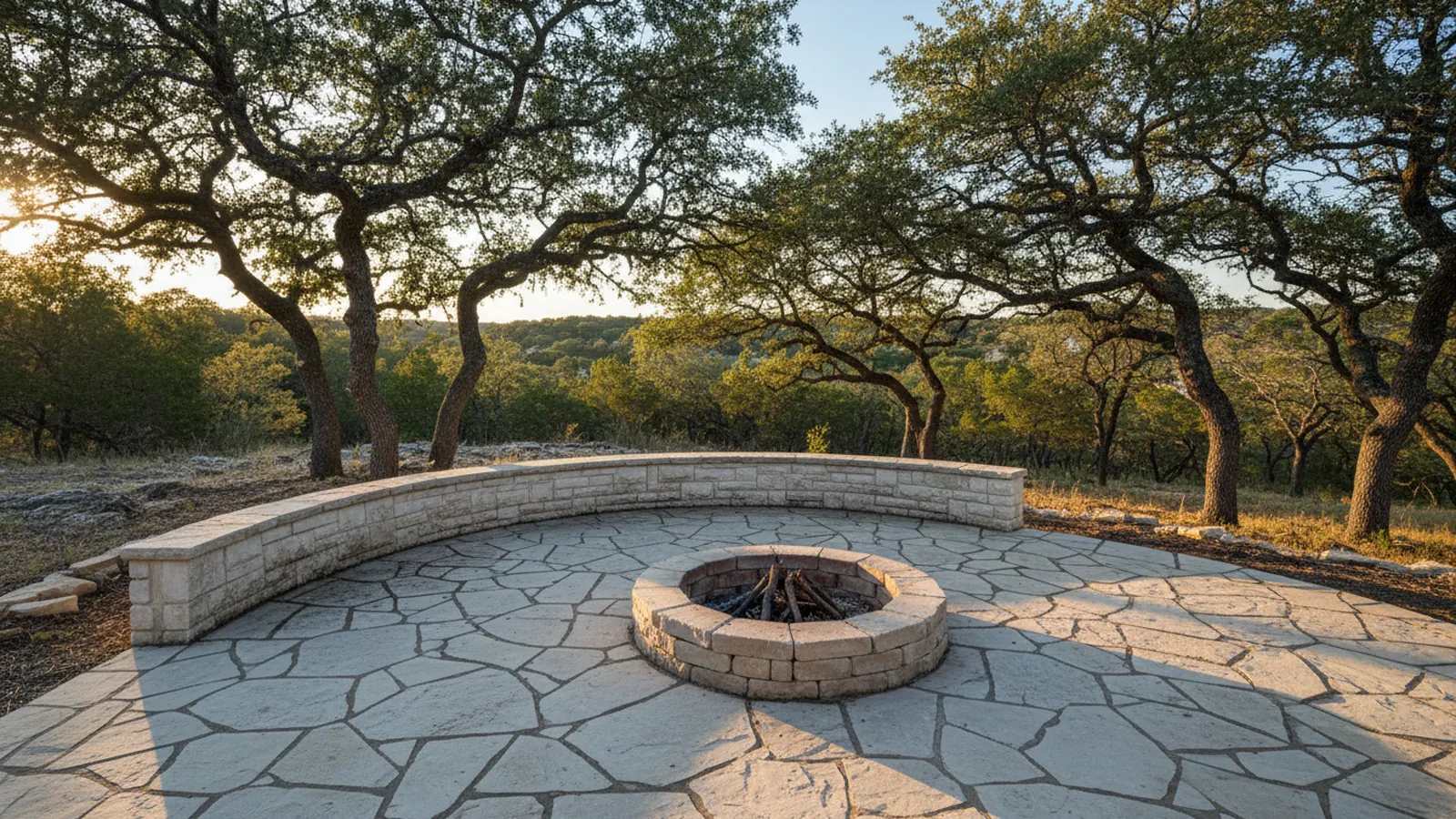
The materials are local. Cut limestone (Lueders and similar) in blocks for walls and slabs for patios, cream to gray, the stone the Capitol and half of Westlake are built from. Flagstone (Oklahoma and Arizona sandstone, Texas limestone) in irregular pieces for walks and patios. Decomposed granite for paths and the ground under natives. Pavers where a formal pattern is wanted. Dry-stack and mortared limestone for walls and raised beds. Each goes on a compacted base of crushed limestone road base, the thing most failed patios in Austin never had, over soil that has been cut, filled and compacted so the surface drains away from the house.
Drainage decides everything on Blackland clay. Water that cannot get away heaves a patio in a wet winter and rots the bottom of a wall. Patios are pitched a quarter inch per foot away from the house; walls get a gravel backfill, a perforated drain at the footing and weep holes. On the limestone side of town the problem reverses: there is no soil to dig, and a wall or a patio is set on the rock and leveled with base.
The four-foot rule shapes the design. A retaining wall over four feet in height needs a City of Austin building permit and an engineer's plan; the same applies in most of the suburbs. Below four feet, dry-stack and mortared walls are permit-free, so a steep slope is terraced into two or three short walls rather than one tall one, which also looks better and costs less. Patios, walkways and fire pits need no permit. Fences over eight feet do; the standard six-foot privacy fence does not. Where a tall wall is unavoidable, the engineer and the permit are itemized on the estimate.
What the crew brings to it
Local stone
Lueders limestone, Texas and Oklahoma flagstone, decomposed granite and pavers, chosen for the house and the budget.
The base nobody sees
Compacted crushed limestone base under every patio and walk, cut and filled to drain away from the house.
Drainage designed in
Patios pitched to drain; walls with gravel backfill, footing drains and weep holes on clay.
Under four feet by design
Slopes terraced into short permit-free walls; an engineer and a permit itemized only where a tall wall is unavoidable.
Tree roots protected
Protected live oaks' root zones respected; patios floated on base rather than dug near them.
Built in the cool season
Stone work scheduled from fall to spring so crews work full days and mortar cures properly.
Hardscaping around Austin: 2026 prices
| Job | Range | Depends on |
|---|---|---|
| Flagstone patio on compacted base | $18 – $30 per sq ft | Stone, pattern, access |
| Cut limestone patio | $28 – $40 per sq ft | Slab thickness, pattern |
| Paver patio | $16 – $28 per sq ft | Paver, pattern, edging |
| Decomposed granite path, edged | $6 – $12 per sq ft | Edging, depth |
| Dry-stack limestone wall, under 4 ft | $35 – $60 per face sq ft | Height, block size, backfill |
| Mortared limestone wall | $50 – $90 per face sq ft | Footing, drainage |
| Fire pit, limestone | $1,200 – $3,500 | Size, gas or wood |
| Steps, limestone | $250 – $500 per step | Width, stone |
Ranges for Austin and the surrounding Williamson and Hays County towns in 2026, to help you plan. The written estimate after the walk-through is the price; it is itemized, free, and good for 30 days.
On the job
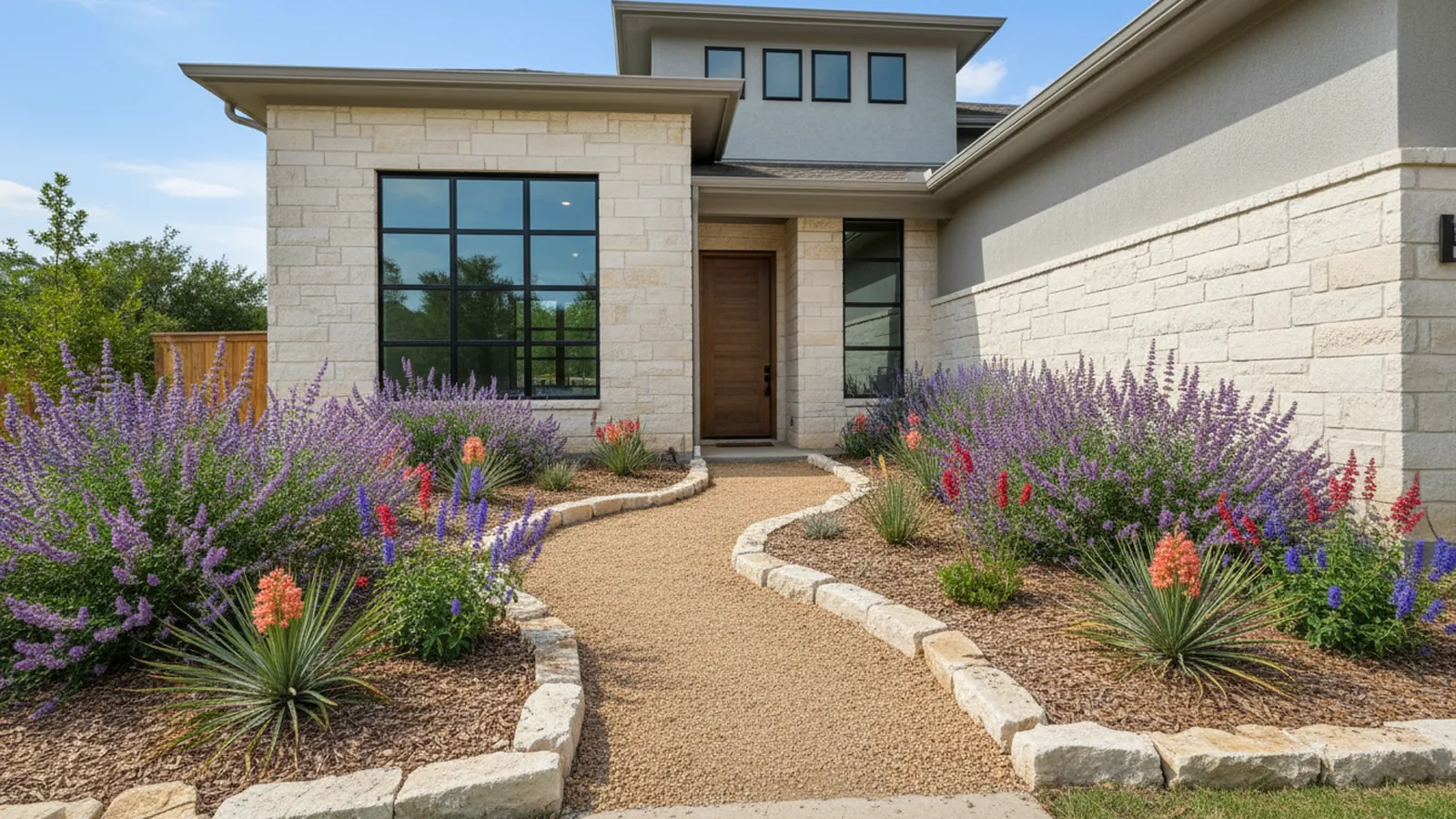
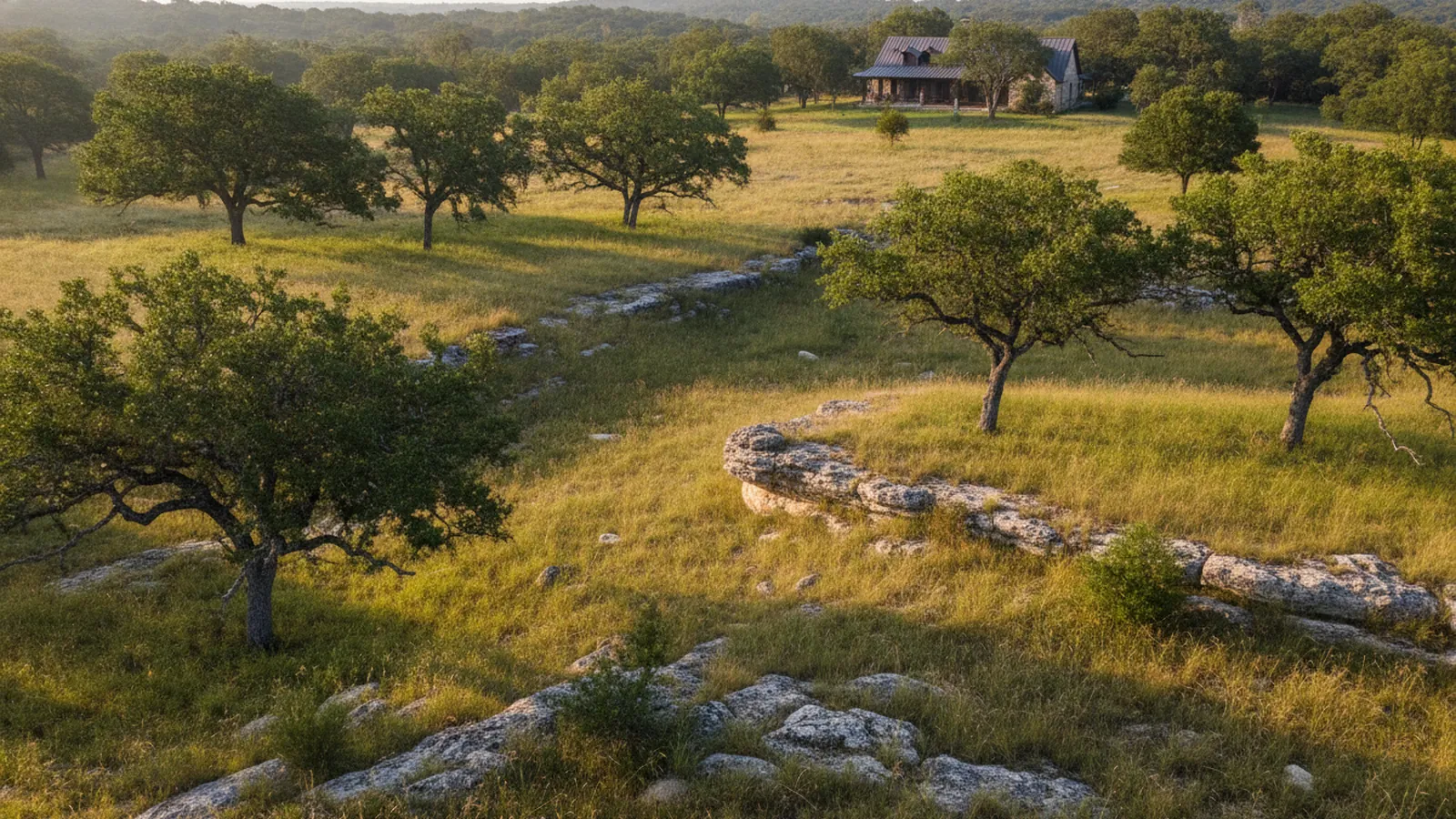
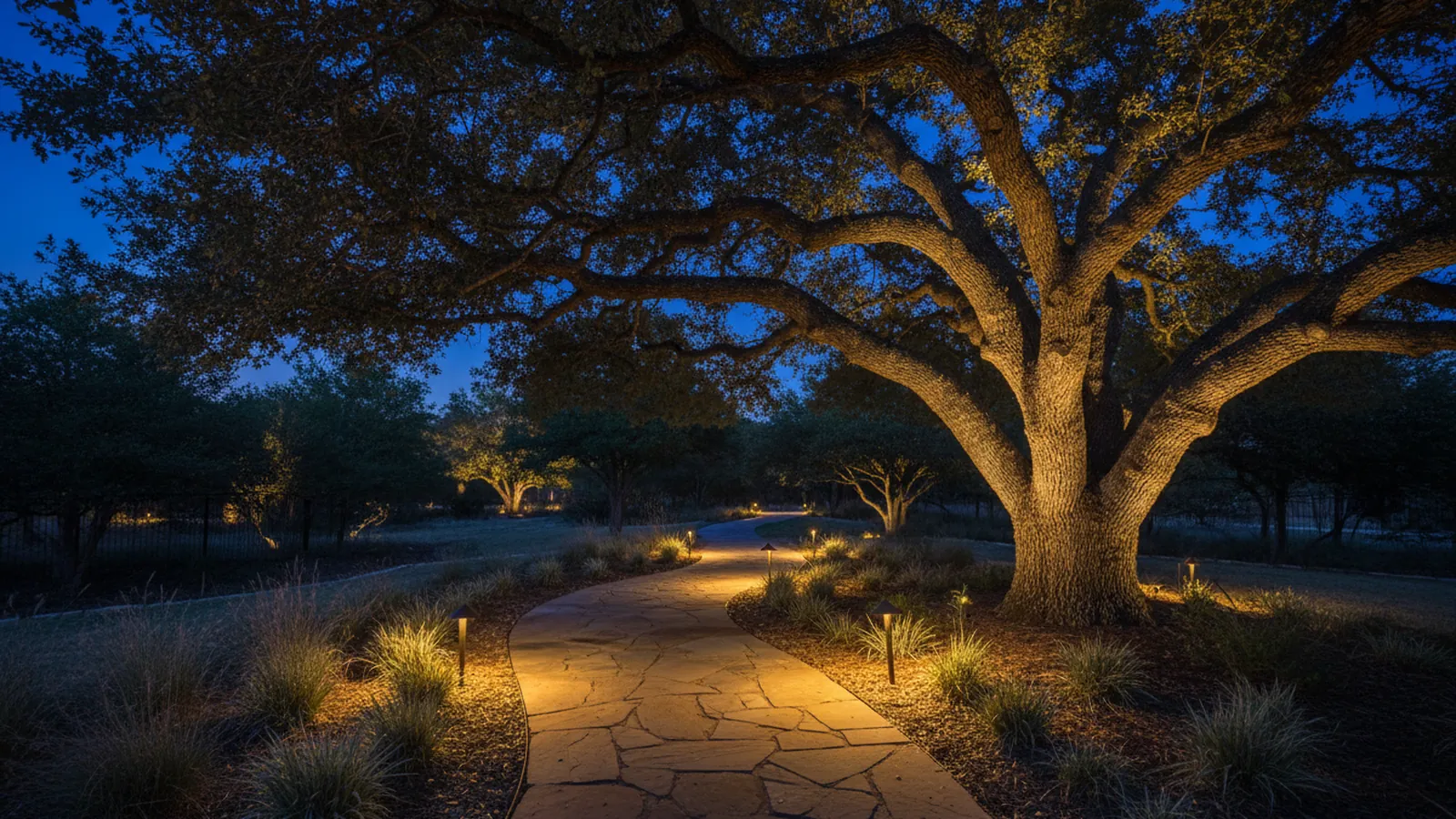
Questions about hardscaping
Do I need a permit for a patio?
No. Patios, walkways, decomposed granite paths and fire pits are permit-free in Austin and the suburbs. A retaining wall over four feet and a fence over eight feet are the structures that need one.
Why terrace instead of one tall wall?
A wall over four feet needs an engineer's plan and a permit, costs several times more per foot, and looks like a dam. Two or three short walls with planted terraces are cheaper, permit-free and better looking.
Will a patio crack on the clay?
Not if it is built on a compacted base that drains. The failures around Austin are patios laid on dirt. Flagstone on base flexes a little with the clay; a mortared slab needs a proper footing.
Can you build near a big live oak?
Carefully. The root zone of a protected tree is off limits to digging, so a patio there is floated on base with minimal excavation, and the city's rules on heritage tree root zones are followed.
How long does a patio take?
A typical 300-square-foot flagstone patio is three to five days. Walls and steps add days; weather and stone delivery add more.
When is the best time to build?
October to April. Crews work full days, mortar cures without flash-drying, and the planting that follows goes in at the right time.