Xeriscaping in Austin: a yard that looks like Central Texas and drinks like it
Xeriscape is not gravel and a cactus. It is a yard designed around water: the right plants in the right place, soil that holds what falls, mulch that keeps it there, drip where irrigation is needed at all, and a lawn only where a lawn is used.
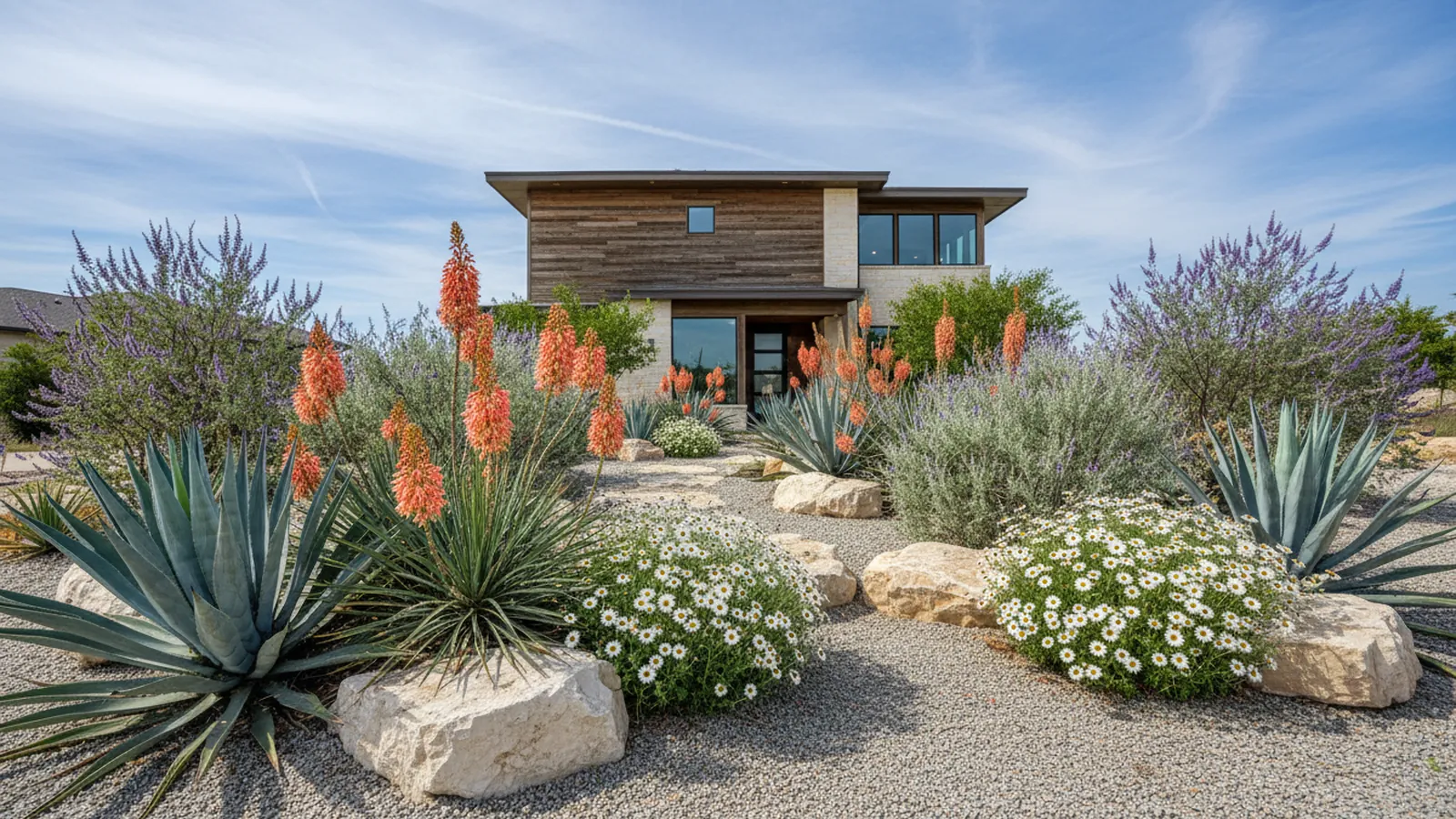
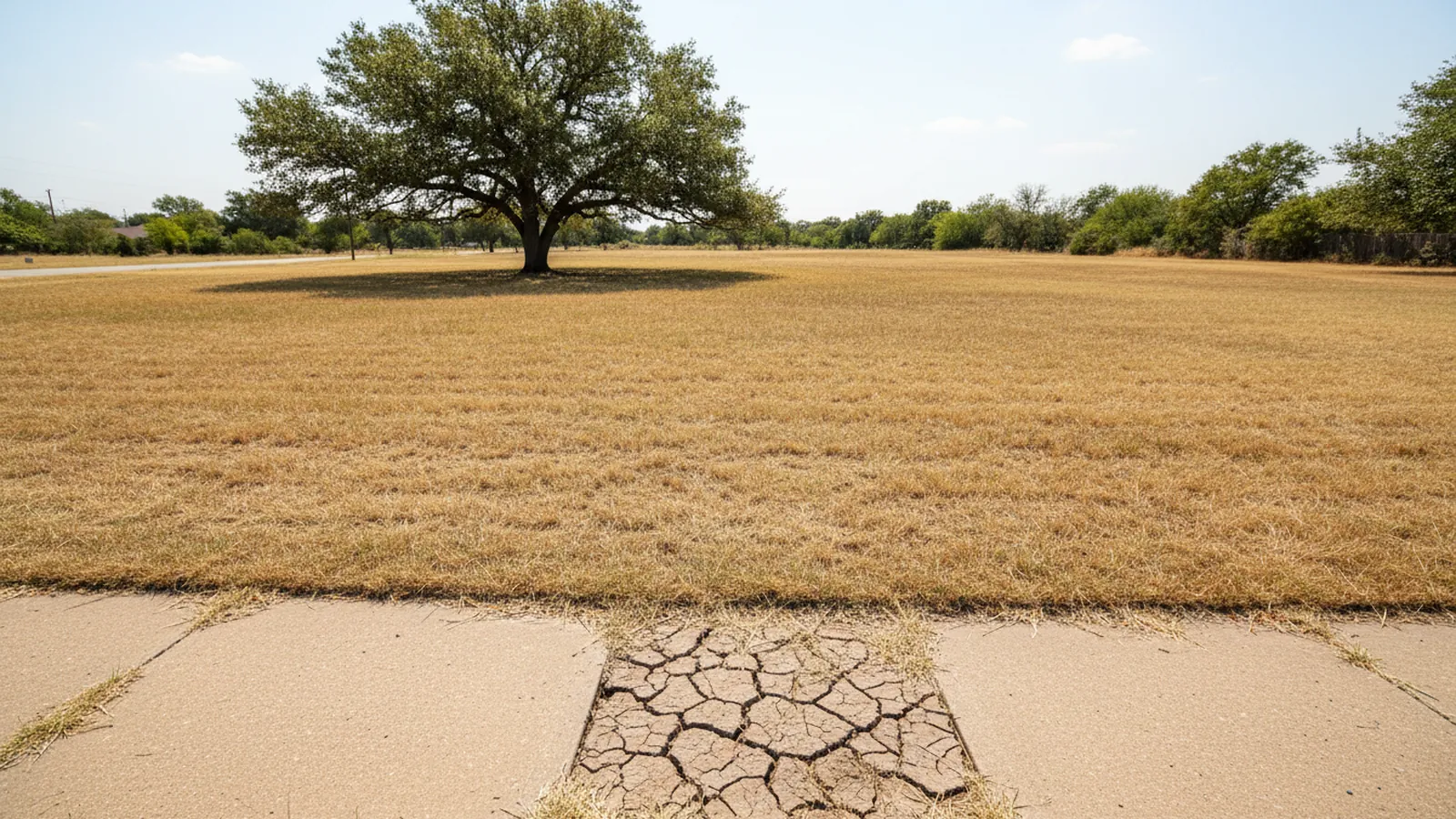
The principles are simple and the plants are local. Plan for water: group plants by need, put the thirstiest near the house and the hose, and let the far corners go native. Shrink the lawn to the part people walk and play on; a strip of Bermuda by the curb that nobody uses is the most expensive square footage in the yard. Improve the soil with compost so it holds rain. Mulch three inches deep, hardwood in beds and decomposed granite on paths. Irrigate efficiently with drip, which Austin's rules treat more kindly than spray. Choose plants that live here. And maintain it, because a xeriscape is lower maintenance, not none.
The plant list is the fun part. For structure: agave, yucca, sotol, red yucca, agarita, Texas mountain laurel, possumhaw, cenizo (Texas sage), dwarf palmetto in shade. For color: salvias in every shade, blackfoot daisy, four-nerve daisy, lantana, Turk's cap under the oaks, esperanza, pride of Barbados, flame acanthus for the hummingbirds. For grasses: Gulf muhly, Lindheimer muhly, Mexican feathergrass, little bluestem. For trees: live oak, Mexican white oak, cedar elm, desert willow, Texas redbud. Most of these came through the freezes of 2021 and 2023 and the droughts between them, which is the whole argument. The plant guide goes deeper.
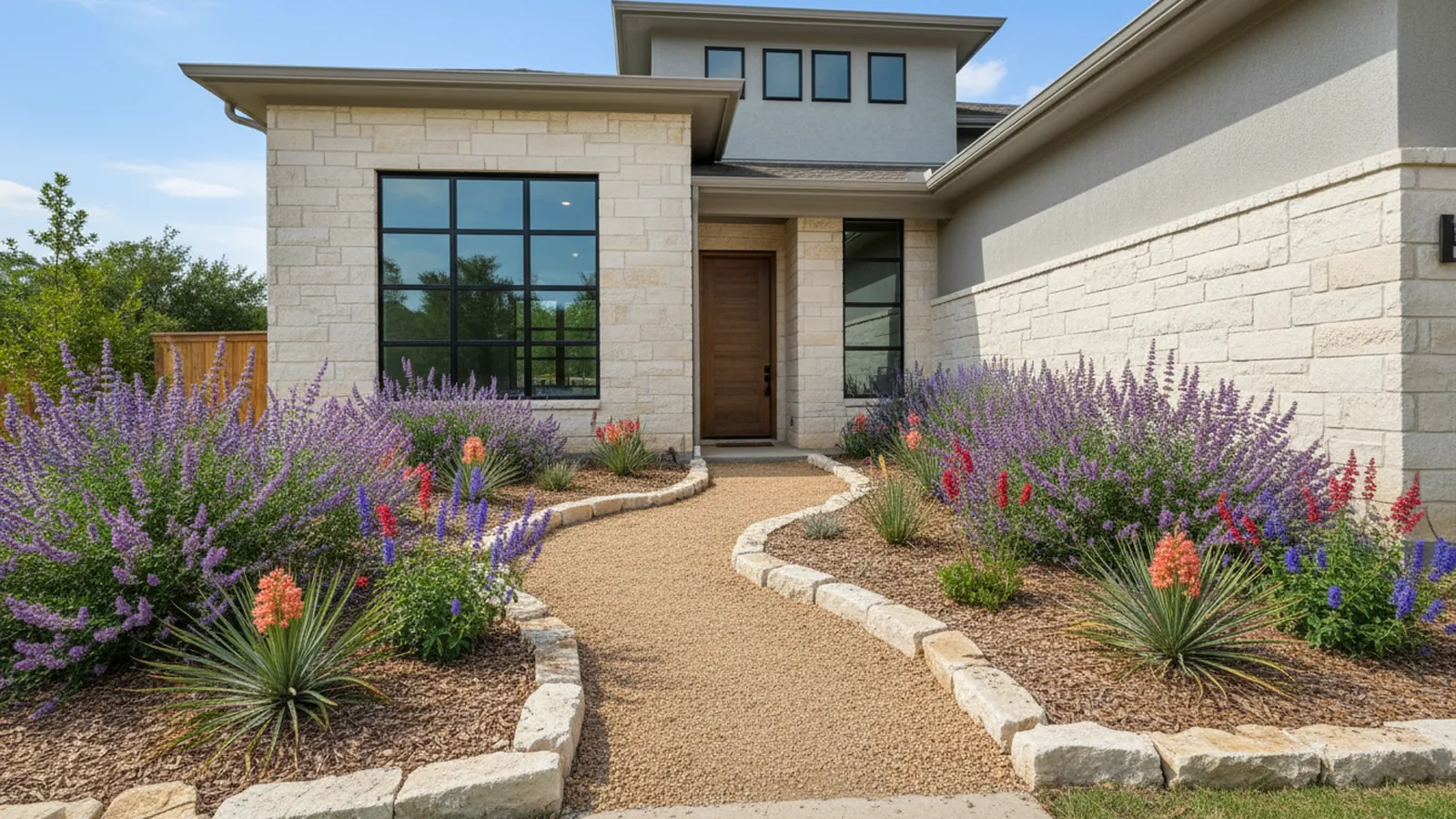
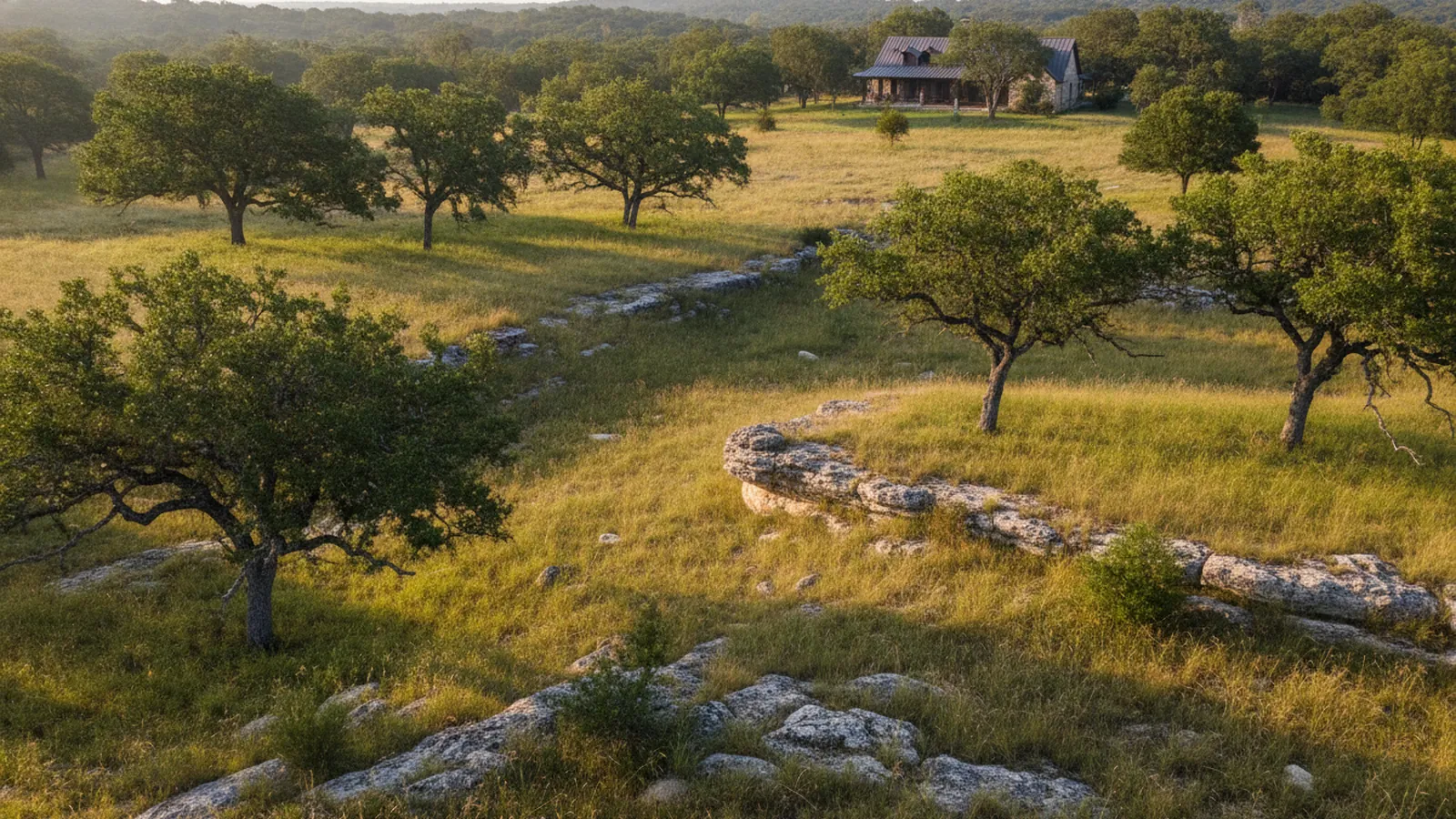
A conversion usually starts with the front yard, because that is where the lawn is least used and the HOA is most interested. The turf comes out, the soil is amended, a drip zone replaces the spray heads (licensed irrigator work), decomposed granite paths and limestone edging go in, and the plants are set in fall so they are rooted by summer. The water bill drops, the mowing stops, and the yard looks like it belongs on this side of the Balcones Escarpment.
What the crew brings to it
Designed around water
Plants grouped by need, the lawn kept only where it is used, the rest planted to live on rain and a drip line.
Native and adapted plants
Agave, yucca, cenizo, salvias, muhly grass, Turk's cap, live oak and the rest, chosen for the soil and the shade.
Soil and mulch
Compost worked in, hardwood mulch in beds, decomposed granite on paths, so what falls stays.
Drip by a licensed irrigator
Spray zones converted to drip, which the city's rules favor and which cuts bed water use by half.
Stone and granite
Limestone edging, decomposed granite paths, boulders and dry creek beds that move storm water and look right here.
Planted in the cool season
Fall and winter installation so roots are established before the first 100-degree week.
Xeriscaping around Austin: 2026 prices
| Job | Range | Depends on |
|---|---|---|
| Front-yard xeriscape conversion | $8 – $20 per sq ft | Turf removal, soil, drip, plants, granite |
| Turf removal and haul-off | $0.30 – $0.60 per sq ft | Grass type, access |
| Soil amendment, compost tilled in | $0.50 – $1.20 per sq ft | Depth |
| Decomposed granite path or area | $6 – $12 per sq ft | Edging, depth |
| Drip conversion, per zone | $250 – $600 | Licensed irrigator |
| Plants, installed, 1-gallon to 5-gallon | $15 – $75 each | Species, size |
| Boulders and dry creek bed | $600 – $2,500 | Stone, length |
| Typical 1,500 sq ft front yard, complete | $12,000 – $25,000 | Plant sizes, stone share |
Ranges for Austin and the surrounding Williamson and Hays County towns in 2026, to help you plan. The written estimate after the walk-through is the price; it is itemized, free, and good for 30 days.
On the job
Questions about xeriscaping
Is xeriscape just rocks and cactus?
No. That is a gravel yard, and it bakes. A xeriscape is mostly plants: natives and adapted perennials, shrubs and grasses, with mulch and some granite, designed to live on rain and a drip line.
Will the HOA allow it?
Most do, with a submittal showing the plan and the plant list; Texas law limits an HOA's ability to ban drought-tolerant landscaping outright. The submittal is part of the quote.
How much water does it save?
Half or more of outdoor use in a typical conversion, once established, with the beds on drip and the lawn reduced. The first year needs more while roots settle.
Does a xeriscape need any maintenance?
Less, not none. A spring cutback of perennials and grasses, mulch topped up, weeds pulled from the granite, the drip checked. A few visits a year instead of forty mows.
What about deer?
Agave, yucca, agarita, cenizo, salvias, muhly and rosemary are mostly left alone in Lakeway and Dripping Springs; the plan is adjusted for the deer pressure on the property.
Can I keep some lawn?
Yes, and most do: a patch of Bermuda or Zoysia where the kids and dogs play, and everything else planted. The lawn that is kept is the lawn that gets used.