Tree removal in Austin, from a dead hackberry to a heritage oak with a city file
Taking a tree down is rigging, physics and paperwork in roughly equal parts. The rigging keeps the pieces off the house. The physics decides whether a crane is cheaper than a day of rope work. The paperwork is the City of Austin's, and it comes first.
Trees come out for a short list of reasons: they are dead (hackberries and ash in Austin die young and often), they are dangerous (a lean toward the house, a hollow trunk, a split crotch, roots lifting the foundation), they are in the way of a build, or they are simply the wrong tree in the wrong place and the owner wants the sun back. Each reason matters to the city. A dead or hazardous tree can be removed without a permit when it poses an imminent threat, though the city expects photographs and may ask for an arborist's letter. A healthy tree over the threshold needs an application.
The thresholds: on developed residential land inside the city limits, a tree is protected at 19 inches in diameter measured four and a half feet above the ground, and becomes a heritage tree at 24 inches. A protected tree needs a permit to remove and replacement planting. A heritage tree needs a demonstrated hardship and mitigation, which means replacement trees or a payment into the city's tree fund, and the city can refuse. The penalties for cutting without a permit are severe, which is why the contractor measures, photographs and files before a saw is started, and why a job on a 30-inch live oak is quoted with the permit timeline built in. Round Rock, Georgetown, Cedar Park and the other suburbs have their own ordinances; the contractor checks each.
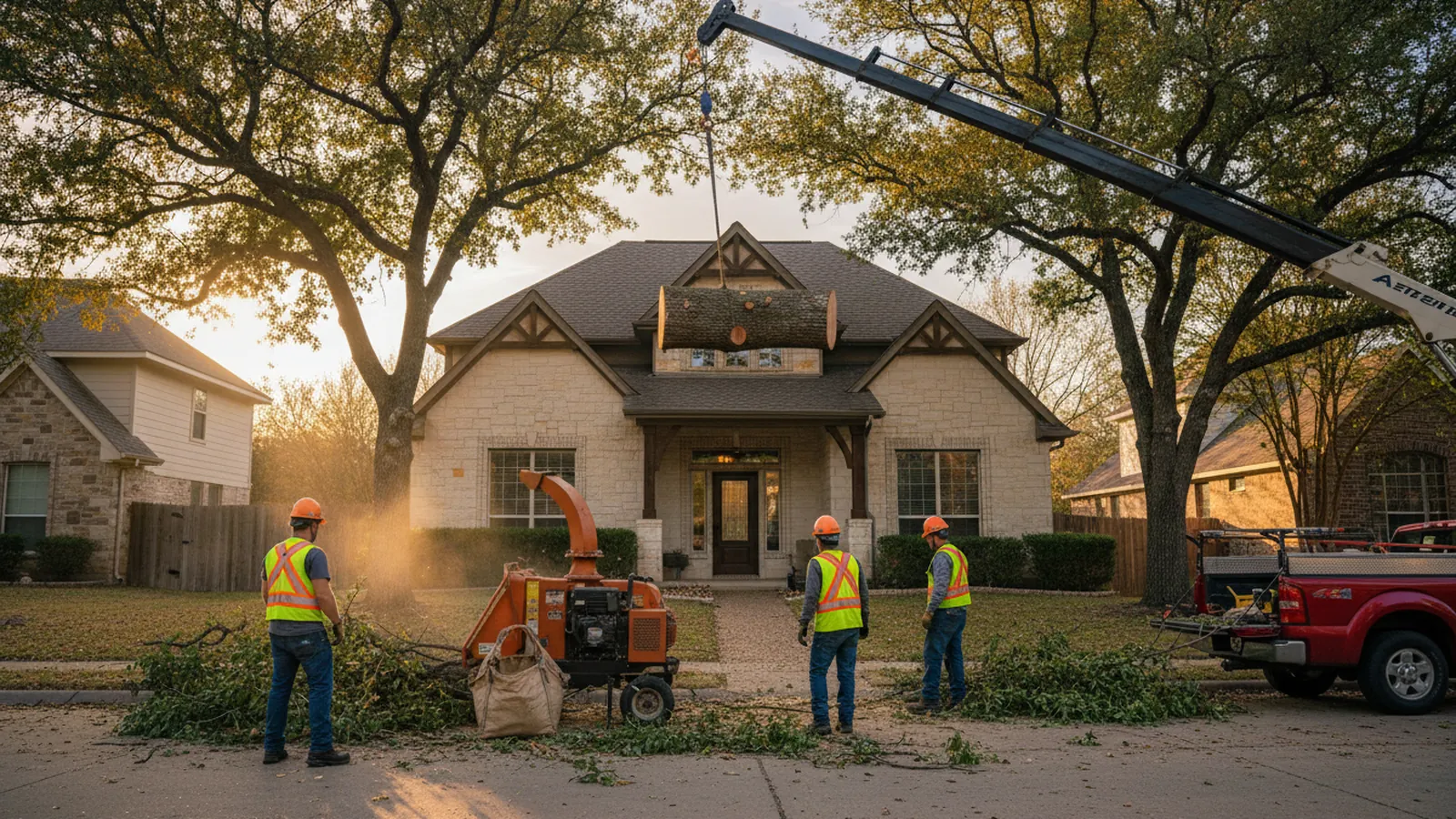
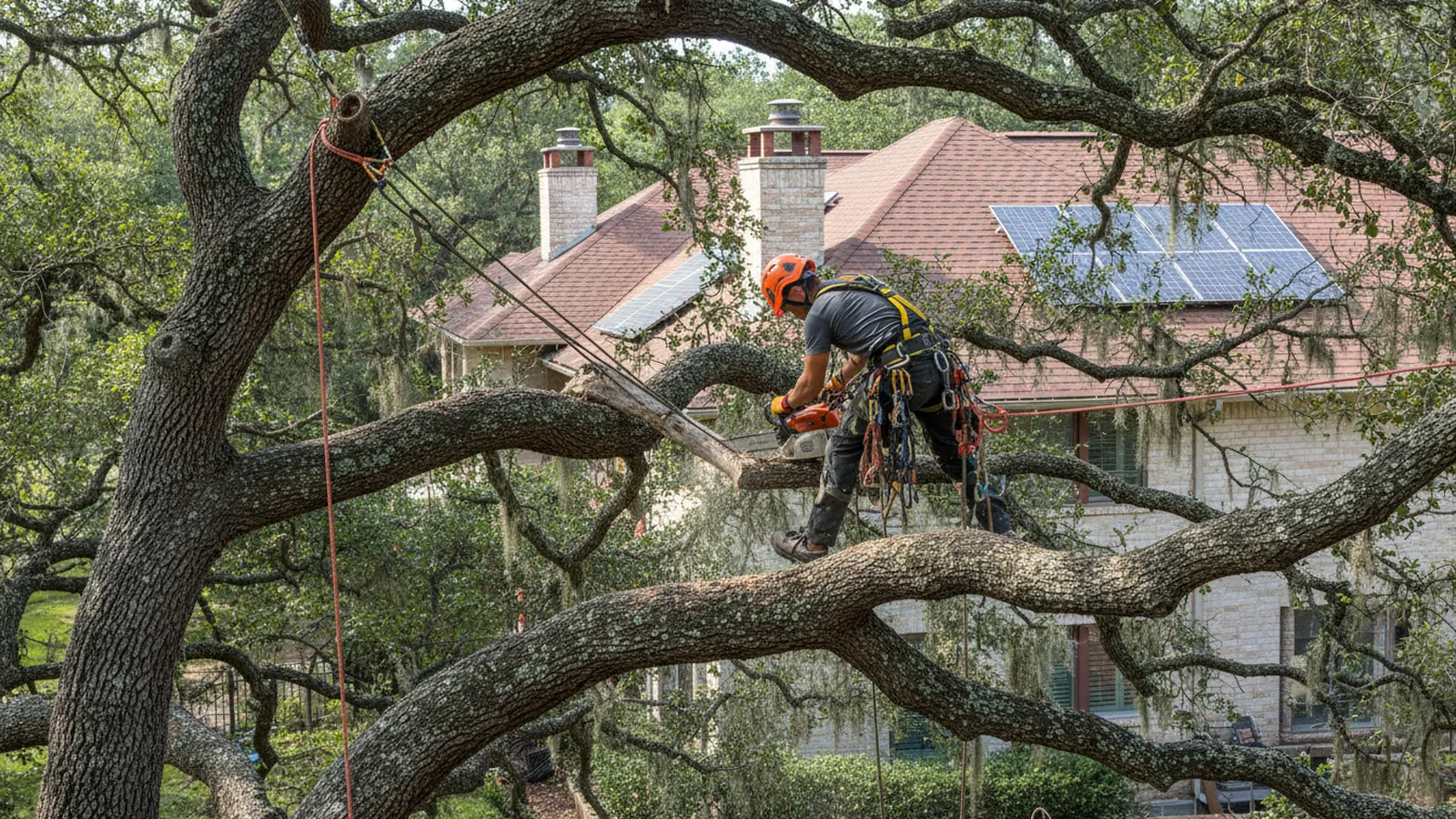
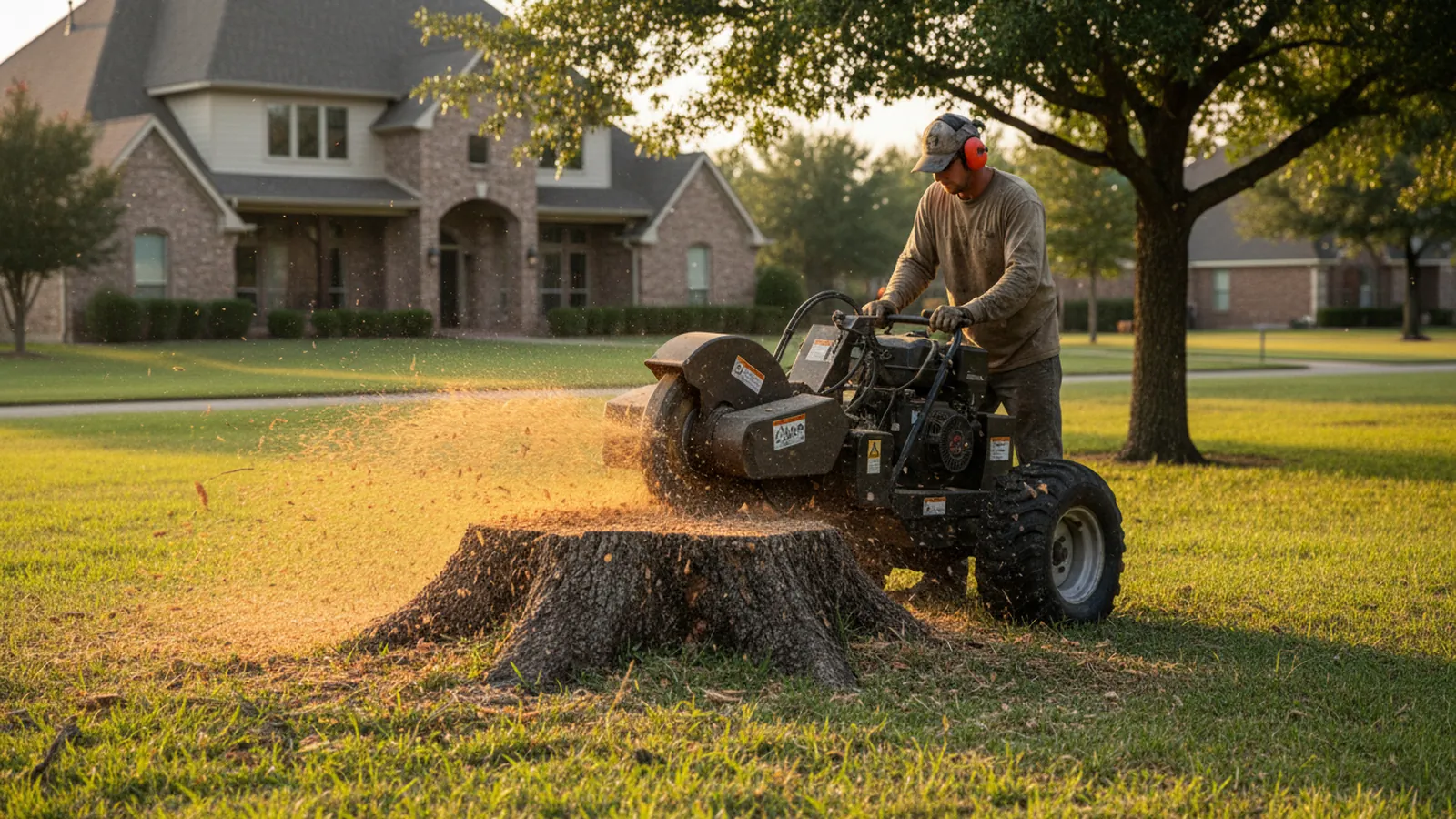
The removal itself depends on the drop zone. A tree in an open yard is felled whole. A tree over a house, a fence, a pool or a neighbor's yard is climbed and taken down in sections, each piece roped and lowered. When the tree is large, the access is tight, or the pieces have to travel over a roof, a crane picks the sections up and over; it costs more per hour and often less per job, because a crane day replaces three days of rigging. Brush is chipped, wood is hauled or cut to length and left, and the stump is ground on request. See stump removal.
What the crew brings to it
Permit before the saw
Diameter measured at breast height, photos taken, the City of Austin or suburban application filed before any cut on a tree over the threshold.
Hazard documentation
Dead and dangerous trees photographed and documented so an exempt removal holds up if the city asks.
Sectional rigging
Trees over houses, pools and fences climbed and lowered in pieces with ropes and friction devices.
Crane when it is cheaper
Large or tight-access trees lifted out by crane, often at a lower total than days of rope work.
Replacement planting
Mitigation trees planted on site where the permit requires, from the city's approved list.
Full cleanup
Brush chipped, wood hauled or stacked, the lawn raked, and the stump ground if wanted.
Tree removal around Austin: 2026 prices
| Job | Range | Depends on |
|---|---|---|
| Small tree, under 25 feet, open yard | $300 – $700 | Species, access |
| Medium tree, 25–45 feet | $700 – $1,600 | Drop zone, rigging |
| Large tree, 45–70 feet, over structures | $1,600 – $3,500 | Climbing time, rigging |
| Crane-assisted removal | $2,500 – $6,000+ | Crane size, pieces, access |
| Dead or hazardous tree, emergency | $600 – $2,500 | Priority dispatch; size |
| City permit application and photos | $150 – $400 | Plus city fees and any arborist letter |
| Stump grinding with removal | $100 – $400 | Diameter; see stump page |
| Wood left cut to length | Discounted | Saves haul-off |
Ranges for Austin and the surrounding Williamson and Hays County towns in 2026, to help you plan. The written estimate after the walk-through is the price; it is itemized, free, and good for 30 days.
On the job
Questions about tree removal
Do I need a permit?
Inside Austin, for a healthy tree 19 inches or more in diameter on developed residential land, yes. At 24 inches it is a heritage tree and removal needs a hardship finding and mitigation. Dead or hazardous trees are exempt when the threat is imminent, with documentation. Suburbs have their own rules.
How long does the permit take?
Days to a few weeks for a protected tree, longer for a heritage tree that needs a hardship review. The timeline goes on the estimate so nobody is surprised.
What does a heritage tree removal cost?
The removal itself prices like any large tree. The mitigation, replacement trees or a fund payment set by the city, is the variable, and it can be substantial. It is itemized on the estimate once the city responds.
Why would a crane be cheaper?
A crane lifts whole sections over the house in minutes that would take a climbing crew a day to rig and lower. On a big tree with a tight drop zone, one crane day beats three rigging days.
Can the wood be left for firewood?
Yes, cut to length and stacked where you want it, which also lowers the haul-off line. Oak and pecan season well; hackberry does not.
Will you plant a replacement?
Where the permit requires it, yes, from the city's approved species list, in the cool season so it establishes. Where it does not, a replacement is still a good idea and is quoted on request.