Beds and mulch in Austin: a clean edge, three inches of mulch, and color that changes with the season
Beds are where a yard shows whether anyone is paying attention. A crisp edge, fresh mulch and the right plants for the month make an ordinary lawn look cared for; a bed full of Bermuda runners and last year's mulch does the opposite. The work is simple and seasonal.
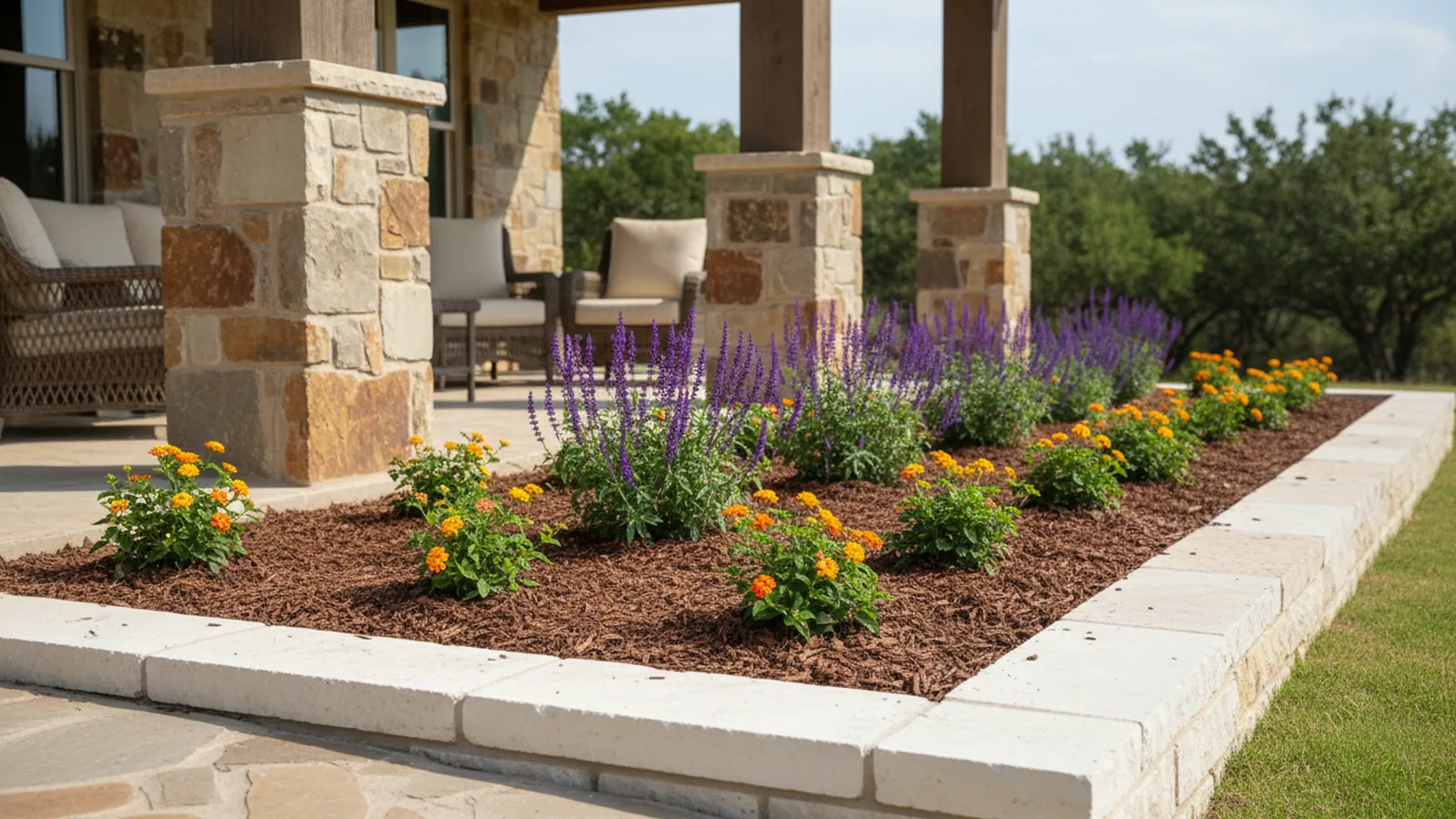
The bed service runs on the Austin calendar. Late winter: perennials and ornamental grasses cut back, roses pruned around Valentine's Day as the local rule goes, beds weeded, pre-emergent in the beds, and the year's first mulch. Spring: warm-season annuals set out once the freeze risk has passed in March, salvias and lantana planted, edges recut. Summer: deadheading, spot weeding, drip checked, mulch topped where it has thinned. Fall: the big planting season for perennials, shrubs and trees, cool-season color set out in October, a second mulch before winter. Winter: leaves cleared, tender plants covered when a freeze is forecast, and the cutback begins again.
Mulch is spread three inches deep, which is the depth that suppresses weeds and holds moisture without smothering roots, and kept off trunks and stems. Shredded hardwood is the standard in Austin beds; cedar for its smell and longevity; pine bark where the soil wants acid, which here is rarely. Dyed mulches fade in a Texas summer and are not recommended. Decomposed granite goes on paths and under agaves and yuccas that rot in organic mulch. A typical front-yard bed set takes four to eight cubic yards a year, in two applications.
Edges are cut with a bed edger or a flat spade to a clean trench, which keeps mulch in and Bermuda out for a season; steel or limestone edging does it permanently. Seasonal color is the one place annuals earn their keep: pentas, zinnias, periwinkle and purslane for the heat, pansies, snapdragons and dianthus for the winter, changed twice a year. Everything else in the bed should be a perennial, a shrub or a grass that comes back.
What the crew brings to it
The Austin calendar
Cutbacks in late winter, planting in spring and fall, color changed twice a year, mulch before summer and before winter.
Three inches, off the stems
Shredded hardwood or cedar at the depth that holds moisture and blocks weeds, kept clear of trunks.
Edges that hold
Beds recut to a clean trench each season, or edged permanently in steel or limestone.
Bermuda kept out
Runners pulled, edges maintained, and a mulch strip between lawn and bed.
Perennials first
Beds built on plants that return every year, with annuals only where seasonal color is wanted.
Freeze and heat care
Tender plants covered when a freeze is forecast; drip checked and mulch topped up in July.
Mulching and flower beds around Austin: 2026 prices
| Job | Range | Depends on |
|---|---|---|
| Mulch, hardwood, delivered and spread | $75 – $120 per cubic yard | Access, bed shape |
| Bed edging, recut | $1.50 – $3 per linear ft | Soil, existing edge |
| Steel edging, installed | $8 – $14 per linear ft | Gauge, curves |
| Limestone edging, installed | $12 – $22 per linear ft | Stone size |
| Seasonal color change, per flat | $45 – $75 | Planted; twice a year |
| Perennial and grass cutback, per visit | $120 – $300 | Bed area |
| Bed weeding and cleanup | $90 – $250 | Condition |
| Bed care program, monthly | $80 – $200 | Bed area, color included or not |
Ranges for Austin and the surrounding Williamson and Hays County towns in 2026, to help you plan. The written estimate after the walk-through is the price; it is itemized, free, and good for 30 days.
On the job

Questions about mulching and flower beds
How often should beds be mulched?
Twice a year in Austin: late winter and fall. Hardwood mulch breaks down fast in the heat and a bed that was three inches in March is one inch by September.
Why not dyed mulch?
The color fades to gray in one Texas summer, and some dyed products are ground pallets rather than bark. Natural hardwood or cedar looks better longer.
How do I keep Bermuda out of the beds?
A trench edge recut each season, or steel or stone edging, plus a mulch strip. Pull runners when they appear; once they root in a bed they are hard to remove.
What flowers survive an Austin summer?
Pentas, zinnias, periwinkle, purslane and angelonia among the annuals; among perennials, salvias, lantana, blackfoot daisy, Turk's cap and esperanza. Petunias and impatiens are done by June.
When should roses be pruned?
Mid-February, by the local rule of thumb, before the spring flush. Cut back by about a third, remove dead and crossing canes.
Can the bed service be added to mowing?
Yes. Most bed care is folded into a monthly program with the mowing, with the seasonal color and mulch itemized when they happen.