Sprinkler repair in Austin by a licensed irrigator, with the system audited against the watering rules
Most Austin sprinkler systems were installed by the builder, set once, and never looked at again. Ten years on they leak, mist, overspray the sidewalk and drown one zone while another dies. Fixing the parts is the easy half; making the system water the lawn inside Austin Water's schedule is the half that saves money.
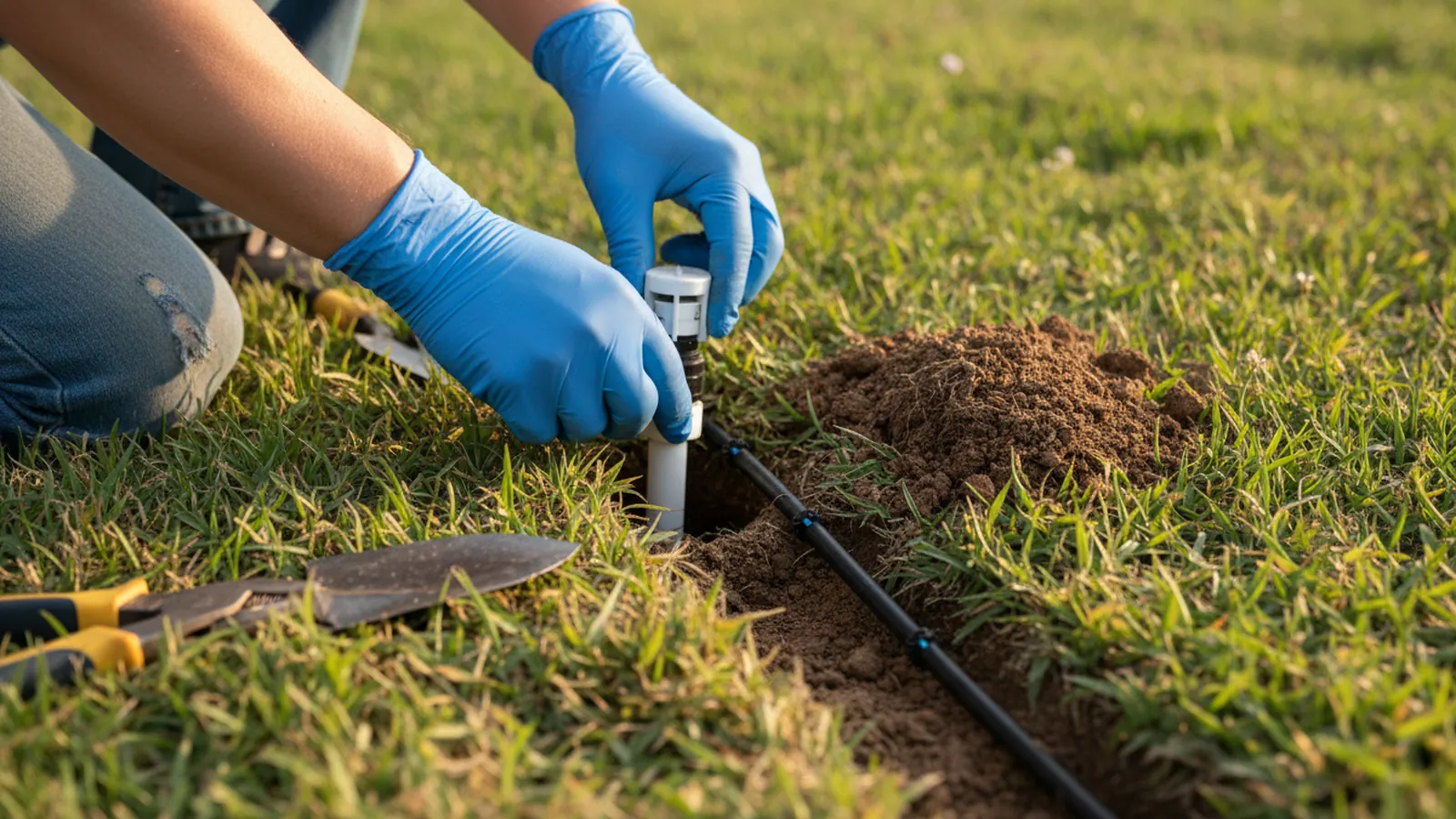
Texas regulates this trade. Designing, installing, altering, maintaining and repairing an irrigation system is work for a TCEQ Licensed Irrigator, or a licensed technician working under one, and a new system inside Austin needs a permit from Austin Water. The contractor who takes an irrigation job holds that licence; this site books the visit and makes no licence claim of its own. The licence matters for more than the law: an irrigator knows how to read a system's pressure, match heads within a zone, and set a schedule that satisfies the city's rules.
The repair visit starts with a walk of every zone while it runs. Broken and clogged heads, heads buried by turf, rotors that stopped turning, misting from too much pressure, geysers from a cracked lateral, a valve that will not close and floods a bed, a controller that lost its program in a power blip, a rain sensor that has not worked since 2019, and the common one: a zone that was never aligned, soaking the driveway and missing the strip by the curb. Each fault is listed and priced, and the common parts, heads, nozzles, valves, solenoids and controllers, are on the truck.
Then the audit. Catch cups across a zone measure how evenly it waters; the result sets a run time that puts down an inch a week in deep, infrequent cycles on the assigned day rather than ten minutes every morning. Matched-precipitation nozzles fix a zone that waters unevenly. Beds come off spray heads and onto drip, which the city's rules treat more generously and which cuts water use in the beds by half. A smart controller with a weather feed skips the day after a storm. The yard ends up greener on less water, which under Austin's schedule is the only way it stays green at all.
What the crew brings to it
Licensed irrigator
Repairs, alterations and audits done under a TCEQ irrigator licence held by the contractor; new systems permitted through Austin Water.
Every zone walked running
Heads, nozzles, rotors, valves, laterals, controller, rain sensor and coverage checked with the system on.
Parts on the truck
Heads, nozzles, valves, solenoids, fittings and controllers for the common systems in Austin's subdivisions.
Catch-cup audit
Zone uniformity measured and run times set for deep, infrequent watering on the assigned day.
Drip for the beds
Spray zones in beds converted to drip, which uses half the water and sits better with the rules.
Smart scheduling
Weather-based controllers programmed to the Austin Water stage in force, with a rain shutoff that works.
Irrigation repair around Austin: 2026 prices
| Job | Range | Depends on |
|---|---|---|
| Service call and system check | $85 – $150 | Credited to repairs over $300 |
| Spray head or rotor replaced | $20 – $45 each | Plus the call |
| Valve or solenoid replaced | $150 – $300 | Access, valve box condition |
| Lateral line leak repaired | $120 – $280 | Depth, length |
| Controller replaced, smart | $250 – $600 | Zones, Wi-Fi model |
| Rain or soil sensor | $90 – $180 | Installed and set |
| Full system audit with catch cups | $150 – $300 | Zones |
| Bed zone converted to drip | $250 – $600 per zone | Bed size, emitters |
Ranges for Austin and the surrounding Williamson and Hays County towns in 2026, to help you plan. The written estimate after the walk-through is the price; it is itemized, free, and good for 30 days.
On the job


Questions about irrigation repair
Do you really need a licence to fix a sprinkler head?
In Texas, irrigation repair is licensed work under TCEQ rules. A homeowner may work on their own system; a contractor must hold the licence or work under one. Ask for the licence number; it is a public record.
One zone is always dry and one is a swamp. Why?
Mixed head types in one zone, a stuck valve, a lateral leak feeding the wet area, or a controller program somebody doubled. The zone walk finds it in minutes.
What are the watering rules right now?
Austin Water sets a schedule by address and a stage by drought conditions, and both change. The audit sets the controller to the current stage; the water restrictions guide explains the system.
Is drip allowed in the restrictions?
Drip is treated more generously than spray under Austin's rules, which is one reason beds go on drip. Check the current stage for the details.
Can you add a zone for a new bed?
Yes; altering a system is licensed work and is done by the irrigator. A new system from scratch needs an Austin Water permit as well.
Will a smart controller actually save water?
Set up properly and tied to a weather feed, it skips rain days and adjusts by season, which typically trims a quarter to a third off outdoor water use. Set up badly it is an expensive clock.